
News accounts report that the Bend, Oregon school shooting Thursday was stopped in part by an armed civilian. From the N.Y. Times (Anna Griffin, Aaron West, Nicholas Bogel-Burroughs & Chelsia Rose Marcius):
A man in a red pickup truck was driving by and saw the teenager throw his shotgun over the fence and start to climb it, the police said. The driver “verbally confronted” the gunman, who paused to open fire at him, pelting the truck with shots….
Outside, Kaylub Giamanco, a father of two girls at the school, had seen the red pickup get shot while driving by on his lunch break. He swerved onto the sidewalk and ran inside.
He found the gunman wrestling with the teacher who tried to stop him and shot him several times with a .40-caliber handgun that had been legally secured in his truck, the police said. The suspect, who died, was carrying 44 more rounds of ammunition.
Readers might want to know: How often do civilians use guns to help stop shooters who pose ongoing threats to multiple people? (By “civilian,” I mean here someone other than a police officer or a security guard; off-duty military members qualify for my purposes.)
Obviously, an exact count is hard to gather, and some cases will be ambiguous. Sometimes, it may not be clear whether the shooter was planning to keep attacking. Sometimes, it may not be clear, at least from press accounts, whether the defender succeeded in stopping the shooter (for instance, by scaring the shooter away). Sometimes a civilian and a security guard or a police officer might step in together. And sometimes news accounts may err. Any count is thus a judgment call, and also likely incomplete because not all incidents make the news.
Still, thanks to a Crime Prevention Research Center spreadsheet, I can say that in 2025 there appeared to have been at least a dozen such incidents. The CPRC report says there were 23; I went through the list, checked the linked news accounts, and tried to exclude ones that seemed just like one-on-one self-defense situations or matters where the defender seemed clearly unsuccessful. (One-on-one self-defense is of course worthy on its own, but it’s not what I’m discussing here.) With those exclusions, and trying to be relatively conservative in what I counted, I ended up counting 12 to 14 such incidents in 2025, depending on how you evaluate some of the more ambiguous ones.
Nor does 2025 appear to be unusual. According to the CPRC report, there were roughly the same number of incidents (or in some years, even more) in 2020-2024 as in 2025. I expect that conservative counts for those years would likewise be comparable to my count for 2025.
None of the 2025 defensive gun use incidents were at a school, but gun possession is generally illegal in schools, so it’s unsurprising that law-abiding gun owners can rarely stop such shootings. They can of course enter the school after the shooting starts, as the man in the Oregon shooting did, but that involves a higher degree of difficulty.
The 2025 incidents, with the date, state, city (and link to news article), and excerpt from the news article:
| 1/12/25 | Neb. | Omaha | [County Attorney] Kleine said [a] man was acting in self-defense and saving the lives of others when he shot and killed Brandon Jones around 3 a.m….
According to Kleine, Jones was asked by management to leave the club. Jones angrily left the club. He got a gun, went back to the club, brandished the gun and started firing it while making threats, Kleine said. Kleine added Jones’ gunfire hit several people. The man, whom Kleine declined to identify, returned fire, striking and ultimately killing Jones outside the club, which had a large crowd of people inside…. |
| 1/17/25 | Fla. | Palm Beach | [T]he sheriff’s office received multiple 911 calls … saying an employee had shot two other coworkers ….
[T]he supervisor said he was in his upstairs office and heard multiple gunshots, prompting him to grab his firearm and head downstairs to the location of the shooting. He told detectives he got to their workstation and saw Edwards [the shooter] holding a firearm and standing over [one of the victims] while attempting to reload the weapon. The supervisor said he told Edwards to drop the gun while he and other employees pushed the suspect to the ground and called 911. |
| 2/15/25 | Tex. | Houston | [A] man opened fire on a crowd of people after a child’s birthday party…
Deputies say several people in the crowd returned fire, hitting Thompson multiple times… |
| 3/31/25 | Tex. | San Antonio | Investigators said that two groups of people were arguing on the [bar] patio, which then boiled over into a fight.
Vela, who was in the parking lot, allegedly saw the fight, pulled out a handgun, and opened fire on the brawl. A bystander pulled out his own gun and fired back, fatally striking Vela. That bystander was also wounded by Vela’s gunfire, and was rushed to the hospital in critical condition. In total, the bystander, two women, and one man at the scene were all injured by the gunfire. |
| 5/20/25 | Ariz. | Peoria | [A bar] employee called 911 to request that police help with an intoxicated patron, Franco, who refused several requests to leave. While officers were en route, police say Franco went to the parking lot, grabbed a handgun from inside his car and started firing shots in the air and into the bar….
Two men on a nearby park bench saw what was happening and intervened. Police say Franco then pointed his weapon at the two men, who were also armed, and a gunfight ensued. Franco was shot in the chest, while the two other men weren’t hurt… [Police officer] Babros commended the men who intervened before any other innocent people were hurt… |
| 6/10/25 | Wash. | Kettle Falls | Stevens County 911 dispatch received calls … [saying] that there was a subject walking down the road with a rifle and had pointed the rifle at them, yelled threats and fired more shots….
Two nearby armed residents heard the disturbance and tried to de-escalate the situation. They observed West fire his rifle in the direction of a man …. That is when the neighbors fired their weapons, killing West…. |
| 6/22/25 | Mich. | Wayne | Police said the suspect exited his Nissan truck wearing a tactical vest, armed with a long gun and a handgun, when he approached the church building and began firing his weapon….
At least two staff members shot the gunman, causing fatal wounds. One staff member, a member of the security team, was shot once in the leg by the suspect. [I included this because it appeared to involve a non-security-guard and a security guard working together; it’s impossible to know what would have happened had the security guard been the only armed defender. -EV] |
| 6/28/26 | Ga. | Atlanta | [A] fraternity had a permit for an event at Coan Park on Woodbine Avenue on Saturday…. [A] random man walked up and got into an argument with some of the fraternity brothers. As they tried to calm him down, witnesses said the man started shooting. Pearson was shot in the head, according to police. He died at the scene….
Atlanta police said others who had their concealed carry permit fired back at the man, who was taken to the hospital in critical condition… |
| 8/2/25 | Ill. | Harvey | A Concealed-Carry License holder fatally shot one of two gunmen who injured a young child and four others in south suburban Harvey on Saturday night, officials said….
Two armed men opened fire at the gathering, injuring five of the guests…. A CCL holder who was present returned fire, killing one of the suspects and injuring the other. |
| 8/6/25 | Iowa | Glenwood | Dennis Burnell killed two people, set his own house on fire, and fired dozens of rounds into nearby homes before dying days later from burn injuries. Investigators later determined Burnell had hundreds of rounds of ammunition he intended to use across the neighborhood…
One of the homes struck by bullets belonged to Senior Airman Harrison Friar. Friar said he quickly secured his family inside, then grabbed his personal firearm and confronted the attacker… Investigators say Friar fired two shots, hitting Burnell in the leg and forcing him to retreat. They credit his actions with giving law enforcement the critical time needed to contain the situation and preventing further loss of life… |
| 8/18/25 | S.C. | Union | [Police officers] responded to a report of gunshots …. When officers arrived, they found 28-year-old Ieshaun Dunn … lying in the grass … [with] a gunshot wound near the heart…
After a thorough investigation, it was concluded by authorities that this was a case of self-defense. According to police, Dunn fired a gun at a group of people and gunfire was returned, leading to Dunn’s death… |
| 9/13/25 | Tenn. | Murfreesboro | Tavarious Chambers is charged with six counts of attempted first-degree murder and tampering with evidence after detectives say he opened fire at a reunion on Saturday, September 13th, striking two people.
According to the preliminary investigation, the reunion event was ending when Chambers arrived at the park pavilion dressed in black and wearing a ski mask. Police say he fired multiple shots in the direction of four adults and two small children. Two people were struck by gunfire. One of the victims fired back in self-defense. [It is not evident whether the defensive gun use was effective in scaring Chambers away or otherwise distracting him from the shooting. -EV] |
| 10/25/25 | Utah | West Valley City | [P]olice responded to reports of a shooting … where a Halloween party attended by teenagers and young adults was being held …. Allen Montelongo … was driving by the party and fired at a group of people standing in the roadway. A 16-year-old male from Sandy was hit multiple times by the gunfire, according to police.
Someone in the group returned fire, police said, hitting Montelongo and causing him to crash his car into a fence. He was later pronounced dead on scene… |
| 12/2/25 | Ga. | Conyers | Conyers Police Capt. Quantavis Garcia said a man opened fire inside the Chiquitos Cantina and Grill … and customers inside shot back at the suspect.
“It played out like a movie. We believe the citizen bystanders who discharged their firearms acted in self-defense and ultimately saved lives inside of that restaurant,” Garcia said. Police say no one was injured in the shooting… |
This of course doesn’t tells us a lot by itself about the debates about gun control and gun rights. But it is a reminder that multiple shootings are indeed sometimes (and not that rarely) stopped by good guys with guns.
The post Civilians Using Guns to Defend Against Multiple Shootings appeared first on Reason Magazine.
]]>
Last week, not only did Oregon’s restrictive gun laws fail to stop a shooter intent on killing innocent people, but a passing good Samaritan had to violate those laws to end the murder spree. Fortunately, authorities don’t appear intent on prosecuting Kaylub Giamanco, father to two girls who attend the school, for ignoring the ban on guns on school grounds to save lives. But the law is clearly more of a threat to people with good intent than it is to those bent on doing harm. Such laws should and must be defied, but lawmakers need to remove these legal minefields before they do more damage.
A Hero Dad With a Gun Stops a Murder Spree
“I want to start by thanking and praising the quick thinking and courage of the Silver Rail Elementary School staff and parents—and the first responders who rushed to the scene,” Oregon Gov. Tina Kotek commented in a press release after the attack by a 16-year-old shooter at Silver Rail Elementary School in Bend, Oregon. “And to the community member who heroically intervened to stop further loss of life, your actions carry a heavy emotional burden—and my thoughts are with you.”
That community member was Kaylub Giamanco, who had two daughters at the school. He was reportedly driving past when he saw the shooter approaching Silver Rail with a shotgun in hand. Giamanco parked his vehicle, grabbed his firearm, and followed the shooter, who had blasted his way through the facility’s locked doors.
The shooter murdered four people, but Giamanco was able to kill him before he did any more damage. In the incident, the murderer obviously violated the law. But so did Giamanco.
Restrictive Laws That Had To Be Ignored
“Oregon gun laws are rated as the 12th strictest in the nation according to data collected by gun violence prevention group Everytown for Gun Safety, but they didn’t stop the shooting of four elementary school children and two teachers at a Bend elementary school on Thursday,” wrote Lillian Mongeau Hughes of The Oregonian. (Reports say three children and a teacher were murdered, with two others injured.)
The gun-control group Everytown for Gun Safety boasts that “Oregon has passed a broad range of gun safety laws in recent years, including a requirement that guns be securely stored whenever they are not in their owner’s immediate control, a prohibition on guns at the state capitol, and a law that gives universities the authority to prohibit guns on their grounds.”
The similarly restriction-oriented Giffords Law Center to Prevent Gun Violence gives Oregon an A- for its laws, ranking the state 11th out of 50. The group notes that the state “allowed local governments to limit firearms in government buildings.”
Of specific interest in this case, the state adopted a law in 2021 that, among other things, says “the governing board of a community college or a district school board” may adopt policies banning guns on school grounds, even for those “licensed to carry a concealed handgun.”
Importantly, the Bend–La Pine Schools, which include Silver Rail, mandate that “no person on grounds of the schools controlled by the Board of Directors for Bend–La Pine Schools (including in school buildings) shall bring to, possess, conceal or use a weapon or firearm at any property under the jurisdiction of Bend-La Pine Schools, any activities under the jurisdiction of the district, or any interscholastic activities administered by a voluntary organization (i.e., Oregon School Activities Association). This prohibition includes those who may otherwise be permitted by law to carry such weapons or firearms.”
The prohibition applies to the Silver Rail murderer, though it was unlikely to be a concern to a person already intent on slaughter. It also applies to Giamanco, who stopped the attack and who must now—probably successfully, given the case’s high profile—rely on the authorities to not enforce their own laws.
A Long History of Defensive Use of Firearms
Giamanco is by no means alone in taking the initiative to stop an attack. I’ve written in the past about Jordan Salinas and others in the Twin Falls incident, as well as Elisjsha Dicken at the Greenwood Park Mall in Indiana. The actions of bystanders are crucial given the evidence that would-be mass murderers must be countered with defensive force within the first 30 seconds to avoid a double-digit body count.
There were 634 active attacks in the United States between 2000 and 2025, according to the Advanced Law Enforcement Rapid Response Training (ALERRT) Center at Texas State University. ALERRT defines an “active attack” as an incident in which “an individual or individuals is actively killing or attempting to kill multiple unrelated people in a public space.” Of those, 374 were resolved before police arrived, with 29 concluded by civilians shooting the perpetrator and another 60 attackers otherwise subdued by civilians.
That’s certainly not a full count of actions by armed citizens to defend themselves and others. The 2026 National Firearms Survey finds that “guns are used defensively by firearms owners in approximately 2.2 million incidents per year. In most defensive incidents no shot was fired (76.3%), about half (50.8%) involved more than one assailant, and in 70.6% of incidents respondents report that the defensive use was successful, such that no crime remained to be reported to the police.”
Undoubtedly, many of those incidents aren’t reported to the police because people who have just averted a threat to themselves or others don’t want to get entangled with a legal system that is all too often hostile to self defense. If all has ended well, why risk arrest for violating a law that would have prevented you from defending yourself or that you may not even have known about?
As The Oregonian points out, Oregon’s “strong laws” didn’t stop the shooting. Those laws ban murder, of course. They also specify that “guns be locked, stored in gun safes or in specialized gun rooms as a way to keep children from accessing firearms,” according to the report. “Police have not said if those laws were violated.” They also ban guns on the grounds of schools with restrictive policies.
Authoritarian Laws Don’t Deter Evil and Should Be Defied
The thing about criminals, though, is that they don’t obey laws. That’s especially true of those who plan murder sprees they don’t intend to survive. The consequences the perpetrators anticipate involve death, and if that’s not a deterrent, the potential prosecution of their moldering corpses holds little weight.
Unfortunately, legal peril can be a deterrent to good people who intend no harm. The threat of authoritarian laws and malicious prosecutors who enjoy state protection could convince some people to leave the means of self defense at home. Fortunately, Kaylub Giamanco wasn’t one of them.
Giamanco’s example at Silver Rail Elementary School is one to be emulated. If we’re to protect ourselves, our children, and our neighbors, we have a right and a duty to defy laws that seek to disarm us and put us at the mercy of human predators. But we shouldn’t have to suffer the threat of such laws to exercise our natural self-defense rights. Given the inability of weapons restrictions to deter crime and the harm they pose for good people, government officials need to eliminate these embarrassing restrictions and get out of our way.
The post Hero Oregon Dad Showed the Importance of Defying Restrictive Gun Laws appeared first on Reason Magazine.
]]>
On October 4, I published a post on “Libertarianism and Democracy,” critiquing political philosopher Matt Zwolinski’s earlier Liberalism.Org article on the same topic. Earlier today, I posted Matt’s response to me. The present post is my rejoinder:
I would like to thank Matt for his interesting and insightful response. We agree on several key points, including that democracy is generally superior to authoritarianism, that libertarian critiques of democracy have great merit, and that – in much of the world – the most serious threats to liberty now come from the nationalist right, rather than the the political left. But we still differ on a few key points related to libertarianism and democracy.
The Nature Libertarian Critiques of Democracy
Perhaps the most crucial disagreement is about the nature of libertarian critiques of democracy. Matt suggests that “[m]ost of what Ilya calls the libertarian critique of democracy is really a critique of big government.” If so, libertarians can just focus on criticizing big government generally, while simultaneously extolling democracy.
There are indeed flaws of big government that arise regardless of whether it is democratic or authoritarian. But those outlined in my earlier Liberalism.Org article are in fact specific to democracy. They include tyranny of the majority, voter ignorance, and the tendency of democracy to create opportunities for illiberal forces to seize power and – in the worst case scenario – even destroy democracy itself. Tyranny of the majority is obviously a problem distinctive to democracy. The same goes for rational voter ignorance, which arises from the perverse incentive structure of individual voters, who have only an infinitesimally small chance of influencing electoral outcomes. And, while illiberal forces can and do seize power under authoritarian systems, the pathways democracies (usually involving the electoral process) create for them are distinctive.
Authoritarian systems have their own distinctive flaws, which are generally even worse. But the distinctive nature of democracy’s flaws means they cannot simply be folded into a generic critique of big government. In addition, as noted in my response to Matt, these distinctive flaws of democracy are at the heart of many of today’s most serious threats to liberty and justice in many democratic systems, including the threats posed by the nationalist right. Thus, it is important for libertarians to emphasize the nature and gravity of these weaknesses, and the value of our proposals for dealing them (which in many cases are different from and better than those advanced by other types of liberals). As emphasized in my earlier response, this is an area where libertarians often have a comparative advantage over other liberals. On the other hand, we generally do not have a comparative advantage when it comes to explaining why democracy is better than authoritarianism.
Along related lines, Matt suggests that libertarian critiques of the state aren’t “an argument against democratic control of whatever the state does do.” But once we recognize that democracy has significant distinctive flaws, there is actually a case for insulating some functions of government from democratic control. Obvious examples include the judiciary and monetary policy (unless we want to cut government out of the latter entirely, and adopt free banking). Indeed, even most non-libertarian liberals recognize that such insulation is desirable in some cases, most notably the courts.
The Problem of Libertarians Tempted by Authoritarianism
Matt argues that we should, nonetheless devote extensive energy to extolling democracy, because doing so is likely to have an impact on fellow libertarians who may otherwise be tempted to embrace authoritarianism. It is likely true that libertarians tempted in this way are more easily dissuaded by other libertarians than by non-libertarians. But such people are a tiny minority within an minority. Libertarians are a small group (probably around 5-10% of the US population or even less, depending on how you draw the line). Those sympathetic to authoritarianism are much fewer still. Thus, it makes little sense to devote more than a modest amount of time and effort to dealing with them, as opposed to addressing the much larger group of non-libertarian liberals who need to be more cognizant of the dangerous shortcomings of democracy.
Moreover, when we look at libertarians who have shifted to the “alt right” or otherwise become advocates of illiberal ideas, the problem in most cases is not excessive skepticism of democracy, but insufficient commitment to liberty – particularly, the liberty of people from different ethnic, racial, or religious backgrounds, that of migrants, and those with unconventional lifestyles. That is pretty obviously the case with Curtis Yarvin and Hans-Hermann Hoppe, both mentioned by Matt. The former’s advocacy of a “post-liberal” ideology of repression (which is really based on pre-liberal models) is pretty obviously not the product of a man who thinks authoritarianism is a better way to protect liberty than democracy. Indeed, his concern is exactly the opposite (that democracy allows for way too much liberty). The same goes for Hoppe’s advocacy of repression of immigrants, gays and lesbians, and people with various non-traditional lifestyles. Peter Thiel, the third case mentioned by Matt, is that of a person who has abandoned libertarianism for “national conservatism,” an ideology focused on exalting the interests of ethnic and culture majorities and using the state to punish perceived “enemies.” To the extent we want to focus on dissuading such people, it should be to reemphasize the value of liberty for all, not extolling the virtues of democracy. People who value democracy more than liberty are generally unlikely to become libertarians in the first place.
Two Smaller Issues
Matt and I also have a modest disagreement over whether there can be situations where some form of authoritarianism can be a lesser evil compared to democracy. I think such cases are extremely rare, but not nonexistent. Matt’s position is less clear, and perhaps I misunderstand him. But he does seem to want to deny this possibility. In response to my examples of the allied occupations of Germany and Japan after World War II, he seems to think these don’t really count because “those occupations were run by democracies answerable to their own voters, and they ended.” But they were still cases where non-democratic government was imposed on a population, and that population itself did not have control over when and if it would end.
In these cases, a non-democratic occupation government was a lesser evil than immediate establishment of democracy, because of the highly illiberal nature of German and Japanese majority public opinion at the time. Similar circumstances can potentially arise in other countries. And, in some cases, a domestically generated authoritarian regime might still be a lesser evil than any democracy that is feasible at the time.
In some situations, the problem can be dealt with by limiting democracy, rather than abjuring it completely. For example, as noted in my earlier response, post-occupation West Germany long banned Nazis and communists from competing in elections, but otherwise committed to free electoral competition. But there could be situations where such constraints are not enough. Because such cases are highly unusual, this is not a particularly important disagreement. But it does have relevance in situations where we consider how to deal with a society where majority public opinion is deeply illiberal.
Finally – and least important – Matt differs with me about the use of the terms “libertarian” and “classical liberal,” arguing that the former are more likely to be democracy-skeptics than the latter. We can, if we want, define the two terms in such a way that people we label with one are generally more suspicious of democracy than those we label with the other one. But that is not the way the terms are typically used. That said, different people use these terms in different ways. To my mind, they are mostly just alternative labels for the same general ideology. But I don’t have much of a beef with people who prefer to use them differently than I do, so long as they make clear what they mean.
Ultimately, Matt and I agree on much more than we differ. But a few of the issues we differ have real significance. I am grateful for the opportunity to consider them.
The post Libertarianism and Democracy Revisited – A Rejoinder to Matt Zwolinski appeared first on Reason Magazine.
]]>
So reports the N.Y. Times (Mark Arsenault) yesterday, discussing former MIT cellular biology professor David Sabatini’s victory on the defamation claim (and defendant’s loss on her harassment and retaliation counterclaim). More details:
[Sabatini] was forced out of his lab in 2021 after an internal Whitehead [Institute] investigation concluded he had a past sexual relationship with a younger and less experienced colleague, Kristin Knouse, over whom he had a career-influencing role. The investigation also found that his lab had maintained a sexualized atmosphere. Dr. Knouse said that the relationship was coerced.
But Dr. Sabatini denied his lab had an improper atmosphere. He maintained that his relationship with Dr. Knouse had been consensual and that Dr. Knouse had schemed to get him fired and disgraced after he became interested in another woman….
After he was pushed out of M.I.T. and the Whitehead, he had talks with New York University about a job. But N.Y.U. staff members and students protested in the streets against his hiring in 2022, and the university did not hire him.
In 2023, he was hired by the Institute of Organic Chemistry and Biochemistry, in Prague, and later opened a Boston-area branch of that institute….
According to the Boston Globe (Madyline Swearing, Bryan Hecht & Tonya Alanez), “In 2023, New York hedge fund billionaire Bill Ackman and an anonymous donor pledged $25 million over five years to help Sabatini get back into science.” The Globe also reports that the jury consisted of “seven women and six men,” for whatever that’s worth.
Here’s an excerpt of what Sabatini alleged (quoting a Massachusetts appellate decision in the case, later reversed as to Knouse’s counterclaim by the Massachusetts high court):
Sabatini and Knouse met in 2012. At the time, Sabatini was a tenured member of the department of biology at the Massachusetts Institute of Technology (MIT) and ran his own laboratory at Whitehead, a research institute affiliated with MIT that receives funding from private resources such as the Howard Hughes Medical Institute (HHMI) and public resources such as the National Institutes of Health (NIH). {As pertinent here, Whitehead and HHMI have a relationship whereby HHMI provides funding for, and in some instances employs, individuals working at Whitehead. At all relevant times, both Whitehead and HHMI employed Sabatini. In addition, NIH provided grants that funded Sabatini’s research at Whitehead.}
Knouse was enrolled in an inter-institutional M.D./Ph.D. program at Harvard and MIT, where Sabatini was one of her instructors and served on her thesis committee. While Knouse was a doctoral student, she and Sabatini sometimes socialized.
Then, in 2018, Knouse started a fellowship at Whitehead, and she and Sabatini began a sexual relationship. While the relationship ended in 2019, Knouse sent text messages to Sabatini in January 2020 seeking to rekindle their relationship. Sabatini responded, asking Knouse to stop and stating that he wanted peace and needed space to figure things out.
In early 2020 through the fall of 2020, Knouse began telling colleagues, both at Whitehead and MIT, that Sabatini had sexually harassed her. In October 2020, Knouse reported the alleged sexual harassment to Lehmann. Around that time, Whitehead hired a consultant to conduct a diversity survey at Whitehead. During the survey, some Whitehead employees reported concerns about Sabatini. In response, Whitehead hired the law firm of Hinckley, Allen & Snyder LLP (HAS) to investigate the culture within Sabatini’s laboratory. The HAS investigators spoke with Knouse and other members of the Whitehead community. In interviews with the HAS investigators, Knouse repeated her allegations that Sabatini had sexually harassed her.
On August 13, 2021, HAS sent a report to Whitehead finding that Sabatini had committed sexual harassment. Whitehead forwarded the report to MIT and HHMI. On August 19, Whitehead provided Sabatini with a copy of the report. On August 20, Sabatini resigned after learning that Whitehead was about to terminate his employment. {Before Sabatini resigned, his coemployer at Whitehead, HHMI, terminated his employment. MIT placed Sabatini on leave.}
And here’s what Knouse alleged (quoting the Massachusetts high court decision); the jury verdict suggests that the jury largely believed Sabatini’s story rather than Knouse’s:
Sabatini was a laboratory director at the Whitehead Institute for Biomedical Research (Whitehead) and a tenured professor at the Massachusetts Institute of Technology (MIT) in 2012 when he met Knouse, then a graduate student at Harvard University and MIT. Sabatini was one of Knouse’s instructors at MIT and served on her dissertation committee.
During a discussion in 2016 concerning whether Sabatini would endorse Knouse’s application for an upcoming fellowship at Whitehead, Sabatini expressed concern that Knouse took herself too seriously and asked Knouse whether she ever had “fun,” “fuck[ed] around,” or had sex. Knouse responded that she did have fun and quickly left the conversation. Subsequently, Sabatini recommended Knouse for the fellowship and supported her grant application, both of which she secured.
Knouse joined Whitehead as a fellow in 2018. That year, Knouse and Sabatini began a sexual relationship that ended in 2019; thereafter, Sabatini continued to make sexualized comments to her. Knouse asserts that she struggled under this dynamic. Sabatini, whose laboratory was next to Knouse’s, was the director of the Whitehead fellows program, and he served as a mentor and reviewer of her work. Knouse feared the potential consequences that losing an influential mentor would have on her career and believed she could not terminate the relationship without professional repercussions. She “began to withdraw from the scientific community” and “experience[d] debilitating feelings of entrapment and hopelessness.”
Around this period, the results of a 2020 culture survey of Whitehead “suggested that Sabatini either personally engaged in sexually explicit and inappropriate discussions or fostered an environment that tolerated—or promoted—such inappropriate discussions and that he threatened those who might report his conduct.” The survey results “amplified complaints” raised by two women, who had trained in Sabatini’s laboratory, and by Knouse, who contemporaneously disclosed to the director that she had felt harassed during her fellowship but, fearing retaliation, did not provide any further details.
In response, Whitehead hired an independent legal team to investigate. The investigators determined, inter alia, that Sabatini had “engaged in and otherwise tolerated sexist and sexualized work discussions with his lab,” and that engaging in such discussions “was an implicit part of succeeding in” Sabatini’s laboratory. They also concluded that there was a “culture of fear and retaliation” within the laboratory. They reported that Sabatini had “engag[ed] in sexual relations with a Whitehead Fellow” and violated several Whitehead policies, including its sexual harassment policy.
Sabatini resigned from his Whitehead position. MIT announced that it was placing Sabatini on leave to perform its own investigation.
Sabatini’s claims against Whitehead had earlier been dismissed (see, e.g., this decision).
Lisa Arrowood, Shayne Kinsella, and Sarah Sousa (Arrowood LLP) represent Sabatini.
The post $6M Verdict in #TheyLied Defamation Lawsuit Brought Over Sexual Harassment Allegations appeared first on Reason Magazine.
]]>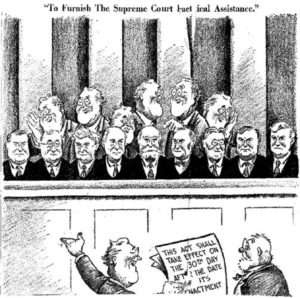
Georgetown law Professor Steve Vladeck is one of the leading critics of the conservative majority on the Supreme Court. But in an insightful recent post on his substack, he outlines key reasons why “court expansion” is a bad response to its flaws. The cure is likely to be worse than the disease:
[I]t seems to me that those who are fully onboard the expansion-or-bust train should have to do more than simply assert that having four new Democratic appointees on the Court in 2029 would be a self-evidently “good” thing. If nothing else, proponents of expansion should have to answer the following four questions:
- How do we avoid touching off a race to the bottom, where each time one party controls the House, Senate, and presidency, it expands the Court to ensure an ideologically and politically sympathetic majority?
- If a race to the bottom is unavoidable, how do we avoid further (and potentially fatal) erosion of public confidence in the Court—which will quite transparently be little more than a lever of power for whichever party last had such a trifecta
- If eroding public confidence in the Court is a feature, and not a bug, how do we insulate against the same erosion of public confidence in lower federal courts?
- What is the case for why expansion is a better way to achieve the desired reforms than alternatives that would (or, at least, should) avoid many of these forward-looking concerns?
He adds that court-packing could easily “permanently undermine judicial review as an institution.” The rest of his piece (which is behind a paywall) offers far from reassuring answers to these questions.
I have offered similar criticisms of court-packing in a long series of articles and blog posts, most recently in a June Lawfare article where I explained (among other things) why the Supreme Court’s recent decision in Louisiana v. Callais doesn’t justify packing, and in a July UnPopulist article critiquing a court-packing proposal advanced by Andy Craig. In these pieces, I explain why the Court’s record of checking dangerous abuses of government power – though not without serious flaws – is considerably better than many critics claim. In addition, I argue that court-packing is likely to undermine effective judicial review – not only by the Supreme Court, but also by lower courts.
Like Vladeck, I think some of the issues that concern critics of the Court can be more effectively addressed in other ways. For example, in the Lawfare article, I explain how Congress can fix the flaws of the Callais decision by banning or restricting gerrymandering. It could also enact a binding ethics code for the justices. Justice Alito was wrong to suggest otherwise, back in 2023. That said, if your main goal is a sweeping reversal of much of the Court’s recent jurisprudence, there may be no easy way to achieve that quickly without court-packing or something like it. I would argue that any benefits that might achieve are outweighed by the enormous costs of destroying judicial review.
In addition, if your objection to the Court’s recent decisions is that they often don’t do enough to constrain unconstitutional actions by other branches of government or by the states, court-packing is likely to make that problem worse, not better. Destroying judicial review won’t enforce tighter constitutional constraints on the executive or bring back Roe v. Wade. To the contrary, it would largely destroy any hope of doing so.
In another recent piece, I assessed “non-packing” rationales for increasing the size of the Supreme Court. There, I argue that these rationales are mostly weak; and, to the extent they have merit, there are better ways to address them than an expansion that amounts to court-packing. I even outline possible ways to increase the size of the Court without creating an opportunity for court-packing (this would require allowing the party that doesn’t hold the White House to pick some of the new justices).
The post Steve Vladeck's "Hard Questions About Court Expansion" appeared first on Reason Magazine.
]]>
Yesterday, in United States v. City of New York, yet another federal court ruled against the Trump administration in a sanctuary city case. “Sanctuary” jurisdictions are state and local governments that restrict their law enforcement agencies and other employees from assisting federal immigration enforcement and deportation efforts in various ways. In this case, Judge Reyes of the US District Court for the Eastern District of New York upheld New York City laws restricting local law enforcement information-sharing and other assistance to federal immigration enforcers.
The court ruled that federal law does not preempt these policies, and that if if it did, there would be a violation of the anti-commandeering requirements of the Tenth Amendment:
Even were the Court to find that the United States has standing and the challenged provisions are preempted—both answered in the negative above—United States’ claims would still fail because the anticommandeering doctrine of the Tenth Amendment to the Constitution of the United States precludes relief.
“The powers not delegated to the United States by the Constitution, nor prohibited by it to the States, are reserved to the States respectively, or to the people.” U.S. Const. amend. X….
The United States argues it is “not seeking to compel participation in immigration enforcement … but rather to remove Defendants’ express and implicit obstacles to the Executive’s duty to carry out its immigration enforcement duties….” New York City replies “if accepted, [the United States’ claims] would require the City to affirmatively assist the federal government in enforcing immigration laws in violation of the Tenth Amendment’s anticommandeering doctrine….” New York City is correct, at least partially.
The United States seeks injunctive and declaratory relief to preempt the challenged provisions… If the challenged provisions were struck, while New York City would not be obligated to carry out federal immigration enforcement, they would be barred from prohibiting their agencies and employees from engaging in federal immigration enforcement by expending personnel, property, and other resources to (1) detain individuals and (2) implement inter-agency information-sharing, including disclosing personally identifiable information, all potentially in violation of state law. And of course, there is nothing within federal law that obligates states to participate in federal immigration enforcement or compels states to comply therewith.
The United States’ preemption arguments amount to nothing more than a backdoor around the Tenth Amendment and rest on a false distinction between (a) compelling local governments’ participation in federal immigration enforcement and (b) prohibiting local governments from dictating how their personnel and other resources may be utilized towards federal immigration enforcement….. “
The basic principle—that Congress cannot issue direct orders to state legislatures—applies” to commands for “affirmative action” and the imposition of “prohibitions.” Murphy [v. NCAA], 584 U.S. at 455 (citation modified). If states cannot remain free to control their agencies and employees to resist federal immigration enforcement, which is within states’ constitutional prerogatives, the Tenth Amendment anticommandeering doctrine means nothing.
This reasoning is correct. And it is notable that this ruling – like many others protecting sanctuary cities – relies heavily on the Supreme Court’s 2018 anti-commandeering decision in Murphy v. NCAA, written by Justice Samuel Alito (probably the Court’s most conservative justice), and joined by all the other conservatives then on the Court. In that case, the Court emphasized that the anti-commandeering doctrine bars Congress from dictating the actions of state and local legislatures, regardless of whether the dictation takes the form of an affirmative mandate, or a prohibition against legalizing or barring something under state law.
Judge Reyes also rejects the administration’s argument under the “intergovernmental immunity” doctrine, which bars states and localities from directly regulating federal agencies or “discriminating” against them. Like the court in the recent case of United States v. New Jersey, he correctly emphasizes that there can be no discrimination when there is no other comparable activity that gets more favorable treatment under the sanctuary jurisdiction’s policies:
“Differential treatment is critical to a discrimination-based intergovernmental immunity claim.” New York, 814 F. Supp. 3d at 282….; “[A] comparator is necessary.” New York, 810 F. Supp. 3d at 353. The United States discrimination claim fails for lack of a comparator.
The United States does not and cannot identify a similarly situated entity. State and local agencies and their officers do not enforce immigration law, nor do members of the public… As the United States concedes, the Federal Government holds the “exclusive charge of enforcing immigration law….” Not only are other federal law enforcement agencies with different charges differently situated, “[f]or a state law to unconstitutionally discriminate against the federal government, it must treat comparable classes of federal and non-federal employees differently, not different classes of federal employees.” Illinois, 796 F. Supp. 3d at 534
I would add that, as I explained in a recent post, the entire antidiscrimination element of the intergovernmental immunity doctrine is dubious, and should probably be overturned by the Supreme Court:
[T]he whole doctrine of intergovernmental immunity strikes me as bogus, judge-made law. There is no provision in the Constitution requiring it. And the federal government is not some historically oppressed minority group protected by the antidiscrimination provisions Fourteenth Amendment. Where state and local governments are otherwise free to refuse to help the feds, that autonomy should not be forfeited merely because they choose to support potentially similar activities by state or local governments, or by the private sector. Obviously, a district court cannot refuse to obey Supreme Court precedent in this field. But I hope the Supreme Court might someday reevaluate that precedent.
This is just the most recent of a long line of defeats for Trump in sanctuary city cases, in both his first and second administration. Judge Reyes cites close to a dozen such cases over the last year alone. I summarized this jurisprudence more fully in a post covering three other recent sanctuary cases, last month:
In cases where the administration has tried to directly coerce states and localities into cooperating, courts have rightly ruled this violates the Supreme Court’s “anti-commandeering” precedents, a series of decisions reached primarily by conservative justices, which hold that the federal government may not force state and local governments to help enforce federal law or carry out under federal purposes. In cases where Trump has sought to withhold federal funds from sanctuary jurisdictions, courts have (also rightly) ruled that the executive cannot impose conditions on federal grants that were not authorized by Congress and (in some cases) that the Trump conditions are unconstitutionally coercive. For my analyses of Trump II court decisions on these issues, see here, here, and here.
My 2019 Texas Law Review article surveying and assessing litigation arising from Trump’s first-term attacks on sanctuary jurisdictions. There and in other writings, I also explain why immigration sanctuaries (and conservative gun sanctuaries) are beneficial, and help protect our constitutional system. See also my February 2026 Dispatch article, “In Defense of Sanctuary Cities,” which provides an overview of these issues, and defends sanctuary jurisdictions on both constitutional and policy grounds.
Yesterday’s ruling may be appealed. But if so, it is unlikely to be overturned.
Trump has posted a few rare wins in sanctuary cases with unusual facts, such as in the Contracts Clause case I analyzed in the September post. But, such cases are highly exceptional. And, as explained in the September post, the Contracts Clause decision has various flaws, and would not greatly impede sanctuary jurisdictions even if it survives on appeal.
Overall, Trump has been losing these kinds of cases so much that he might even get tired of losing.
The post Trump Loses Yet Another Sanctuary City Case—This Time Against New York City appeared first on Reason Magazine.
]]>
Three Charlotte cops have resigned and three more are facing termination after a Flock probe uncovered a text chain littered with racist messages, religious and sexual bias and a reported competition over who could arrest the most black people.
The group chat came to light after Charlotte-Mecklenburg Police Department (CMPD) officer Seth Elliott was caught using Flock’s database to out an undercover cop to his drug dealer friend, which sparked an investigation by the North Carolina State Bureau of Investigation (NCSBI).
When questioned by the NCSBI, Elliott, who has since resigned, admitted he ran the plate but denied knowing that it belonged to an undercover officer. He told agents that his friend had reached out to ask if Elliott could help identify a strange person hanging out around his father’s business, so Elliott ran the plate through Flock’s database. According to reporting from the Watauga Democrat, the NCSBI arrested Elliott in July and charged him with ” illegally accessing a government computer, a Class 1 misdemeanor.”
During its investigation into Elliott, the NCSBI downloaded data from his phone, which it turned over to the CMPD, where a subsequent review uncovered the racist text thread. According to anonymous sources who spoke to Charlotte’s WBTV, the group chat included “numerous uses of the ‘n-word’ related to use of force and discharging firearms at black residents,” and a competition to see who could arrest the most black people. In one text reportedly written by a member of the group, an officer said, “Our texts sound like a clan [sic] rally,” according to a message reviewed by WCNC Charlotte, a local NBC affiliate. At a press conference on Thursday, CMPD Police Chief Estella Patterson said that an independent chain-of-command board unanimously voted for the officers’ termination. Three have already resigned and the other three she “hopes to refer to as former employees.”
The fallout won’t end there. Every case these officers touched could now be called into question, and for good reason. In Giglio v. United States (1972), the Supreme Court ruled that prosecutors must disclose information that could undermine the credibility of a government witness or law enforcement officer. Mecklenburg County District Attorney Spencer Merriweather will have to examine the messages and determine whether their word as witnesses can still be trusted. Depending on his decision, this could lead to dropped cases and challenges to prior convictions.
Defense attorney Tim Emery weighed in, telling WBTV that the officers’ “credibility is severely questioned and compromised,” and that the district attorney’s office should consider halting cases in which the officers were heavily involved.
Police abuse of Flock and other automatic license plate readers (ALPRs) is not new. The Institute for Justice, a libertarian public interest law firm, has cataloged over 200 instances of ALPR abuse at the hands of the police since 2018. In the last year alone, officers have been caught using ALPRs for everything from pursuing personal grudges to stalking exes and romantic interests. This time, the victim of Flock misuse was an undercover officer rather than a civilian.
The post 3 Charlotte Cops Resign After Group Chat Reveals Competition To Arrest the Most Black People appeared first on Reason Magazine.
]]>
President Donald Trump is plainly frustrated that the Ukraine War continues to drag on. This is understandable. Trump came into office pledging to end this conflict on day one, and succeeded in resetting the expectations of Ukrainian President Volodymyr Zelenskyy. Trump also met with Russian President Vladimir Putin in 2025, in hopes of bringing the war to a close. Yet no peace deal emerged.
In recent weeks, Trump has complained ceaselessly that the war is impacting global energy prices, and thus indirectly hurting the American economy and damaging Republicans’ midterm prospects. Earlier this week, the president arbitrarily declared an “energy ceasefire” and instructed both countries to stop targeting each other. Neither side had been given forewarning of this, but Ukraine went ahead and complied; Russia did not. With no actual ceasefire in place, Ukraine resumed hostilities.
Unfortunately, it appears that Trump has decided to punish Zelenskyy rather than the responsible party: Putin. It’s not Ukraine that wants war—it’s Russia. It’s not Zelenskyy prolonging this conflict—it’s Putin. Ukraine is willing to accept an immediate ceasefire and negotiations. Russia is not. Putin’s action suggest that the goal is to subjugate Ukraine, and regardless of the impression he gives Trump, Putin is not willing to stop.
Given this, the rational course of action for the U.S. is to continuing supporting Ukraine until Russia—the invading party—is willing to negotiate. And yet, the U.S. is seemingly (suddenly) sabotaging Ukraine. This week, the Ukrainians discovered that use of Starshield, the U.S.-run satellite system they use to defend themselves against Russian forces inside Ukrainian territory, had been restricted; Starshield is a division of SpaceX, but according to Elon Musk, it is operated independently by the U.S. government. If it’s not functioning properly, the most likely reason is that Trump made such a call.
Trump also signaled a willingness to cut off the Ukrainians from routine intelligence sharing with regard to Russia’s bombing targets, though the administration insists that no such decision has been made. Such intelligence is extremely important for the Ukrainians, and vital for civilian safety. Ukrainians rely on air raid sirens to let them know that Russian strikes will soon take place and they should seek shelter. (I learned this firsthand during my trip to Ukraine in June, which was sponsored by a pro-Ukrainian aid group.) It’s malicious of the U.S. to deliberately keep the Ukrainians in the dark when we could save lives by letting them know what we know.
None of this means that the U.S. is obligated to send even more tax dollar to Ukraine or to supply them with weapons. We have already spent $185 billion, after all.
But the U.S. should not deliberately undermine the Ukrainian position by failing to share intelligence or by hamstringing already existing military systems. Of course Trump would be within his rights to work to constrain Zelenskyy if Zelenskyy were the barrier to a peace deal, but this is simply not the case at all. We can’t blame the Ukrainians for defending themselves in the face of invasion when Putin is the one refusing to negotiate.
Given all this, Zelenskyy has admitted that he feels “betrayed” by Trump and is concerned that Ukraine is losing the U.S. as a partner. The war will continue regardless, with Europe stepping in to fill whatever void the U.S. leaves behind. It’s proper for Europe to shoulder more of the responsibility for protecting Ukraine, since this war is ultimately a Europe problem—the U.S. cannot be solely responsible for the security of the entire free world.
But there’s a difference between thinking Europe should do more and the U.S. should do less, and thinking that the U.S. should actively hurt Ukraine to help Russia so that energy prices briefly (maybe?) improve. That’s not in the long-term best interests of anyone, including and especially the U.S.
Rather than bullying Ukraine into agreeing to put up less resistance as Russia conquers it, Trump should put his negotiating skills to work on Putin.
This Week on Free Media
The latest episode of Freed Up will be available later this afternoon, so subscribe here and check back soon!
Worth Watching
Here’s something exciting: I am participating in another Reason Versus debate—this time alongside the boss, Katherine Mangu-Ward! We will be up against Mehdi Hasan and Jason Stanley, who posit that “authoritarianism is a right-wing problem.” It should be an entertaining, spicy debate, and (if we’re being honest) probably not quite as friendly as the last one I was involved in. Get your tickets here!
The post Blame Russia, Not Zelenskyy, for the Ukraine War's Endless Slog appeared first on Reason Magazine.
]]>
Is a college educations worth the hassle and expense? Amid concerns over soaring tuition costs and campus political intolerance, a growing share of Americans aren’t convinced that higher education is worthwhile. Academics themselves—the honest ones, anyway—acknowledge that they’ve squandered a lot of goodwill over the years. Fortunately, it’s still possible to get an education that justifies the time and money—though the path doesn’t necessarily go through college.
High Costs and Political Bias Sour Americans on College
“Three in 10 Americans (31%) think a college education is ‘very important,’ four percentage points below last year’s reading, the previous low among the seven times Gallup has asked this question since 1978,” the polling firm reported earlier this month. “As recently as 2013, more than twice as many U.S. adults (70%) said college was very important.” Gallup adds that “the percentage of U.S. adults who say a college education is ‘not too important’ has risen from 6% in 2013 to 29% today, while the percentage saying it is ‘fairly important’ has increased from 23% to 39%.”
Higher education plummeted in public esteem for more than one reason. For years, Americans have voiced concern about rising costs and political intolerance on campuses. Last year, even as a Vanderbilt University poll found a slight rebound in favorability toward colleges and universities, the authors noted that “Americans across the political spectrum still are deeply concerned about the affordability of higher education” and “many Americans see political bias in higher education as a serious problem.”
The problem was underlined this year when some colleges broke the $100,000 mark in annual costs. “Today, a bachelor’s degree at some of America’s top schools can cost upward of nearly half a million dollars over four years,” reported Business Insider. “And the trend doesn’t seem to be slowing down.”
Almost at the same time, Vanderbilt released a report warning “there are several worrying tendencies in contemporary academic scholarship in the humanities and social sciences, all of which reflect, to varying degrees, a distinctive form of politicization in which the scholarly enterprise is taken to be subordinate to, or in the service of, political (social or moral) goals beyond the advancement of knowledge and understanding.” The goals of this politicization, the study added, “are generally though not exclusively associated with the progressive left.”
Unsurprisingly, many Americans balk at paying through the nose so they (or their kids) can spend four years at woke camp. That trepidation undoubtedly contributes to declining college applications at a time when the applicant pool is already shrinking. Many students who do apply to college are applying very modern filters to the schools they’ll consider.
“The median student is willing to pay up to $2,617 (12.5%) more to attend a college where the share of students with opposing political views is 10 percentage points lower, suggesting that political identity plays a meaningful role in the college choice process,” found a 2025 study from the Annenberg Institute at Brown University which documented “a steady increase in political sorting across American colleges.”
This month, a survey from Art & Science Group, a higher education consultancy, found that among college applicants, “the share ruling out colleges solely because of politics in a state rose from 24% in 2023 to 31% in winter 2026 and 34% in summer 2026.”
Employers haven’t stopped hiring from prestigious colleges and universities. But the definition of “elite” has changed, with some firms leery of traditional Ivy Leagues and preferring southern schools where costs are lower and ideological tolerance still has a place.
College Still Offers Value for Those Who Choose Wisely
Higher education can still be worthwhile for students who apply due diligence to their selection of schools and fields of study. College offers a good return on the investment of time and money for those who choose wisely.
According to the Education Data Initiative, “an average bachelor’s degree has a 560.53% lifetime return on investment with a median lifetime return up to 1,040.14%.” But not all degrees are equal. “The most cost-efficient bachelor’s degree is in management information systems and statistics, with a lifetime ROI of 1,758.59%,” while “a Bachelor of Psychology offers the lowest lifetime ROI at -122.78%, representing a $54,188 loss in degree-based earnings (compared to median earnings with a high school diploma).”
The 10 bachelor’s degrees with the highest lifetime earnings are an assortment of engineering disciplines, management information systems and statistics, accounting, finance, economics, mathematics, and the like. But return on investment also depends heavily on the cost of the degree; it’s more difficult to get your money’s worth when you pay top dollar.
Importantly, science, technology, engineering, and mathematics fields are also the academic disciplines with the least lopsided political balance among professors.
Trade Schools Rise as Employer Demand for College Degrees Falls
But college is not the only choice for young Americans planning their futures. According to a 2025 Harris survey for the American Staffing Association, more Americans now recommend that graduating high school seniors go to trade school (33 percent) than recommend college (28 percent).
Trade schools cost a fraction of what four-year colleges cost. And they satisfy a growing demand for skilled workers.
“Of the 124 skilled trades occupations, 86 are projected to grow or hold steady, and more than 600,000 net new positions are projected through 2035,” the Alliance for Skilled Trades, a coalition of companies that depend on trades people, notes in a recent report. “Employers will need to fill about 1.7 million openings each year.”
Note that new positions are opening even as the population of job-market entrants shrinks.
And employers increasingly value experience and in-house training over college degrees of dubious value. Last year, a quarter of employers reported that they were eliminating requirements for bachelor’s degrees among new hires.
Higher education still has a role to play. But “education” doesn’t have to mean four years of high tuition. It can be a certification program or trade school that launches graduates into a productive life.
After decades of being the default path for many Americans, colleges and universities have alienated people with high prices and intolerant ideological environments. They still have a lot to offer, but now they have to compete with alternatives for the time and money of a skeptical public.
The post College Still Has a Future, but It's No Longer the Default Choice appeared first on Reason Magazine.
]]>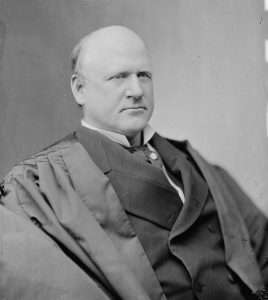
The post Today in Supreme Court History: October 14, 1911 appeared first on Reason Magazine.
]]>