The post Today in Supreme Court History: November 28, 1872 appeared first on Reason Magazine.
]]>
The December 2026 issue of Reason explores Argentine President Javier Milei’s accomplishments and what is yet to be done.

In 1988, the great economist Robert Lucas Jr. asked a simple but haunting question: “Is there some action a government of India could take that would lead the Indian economy to grow like Indonesia’s or Egypt’s? If so, what, exactly? If not, what is it about the ‘nature of India’ that makes it so? The consequences for human welfare involved in questions like these are simply staggering. Once one starts to think about them, it is hard to think about anything else.”
Adam Smith offered the answer in a 1755 lecture: “Little else is requisite to carry a state to the highest degree of opulence from the lowest barbarism, but peace, easy taxes, and a tolerable administration of justice.”
The advantages to peace are obvious. A country won’t get rich if foreign tanks are rolling through or if warring factions are killing each other. Resources are diverted from production, specialization, and innovation into fighting. One doesn’t accumulate capital for tomorrow if it’s likely to be destroyed or stolen.
“Easy taxes” requires a bit of translation to modern language. We instinctively reel from taxes as an imposition on private property, and one that often goes to finance private interests with public means. But we might decide that taxes are necessary to provide security, or even to provide public goods. In order to facilitate economic activity and capital accumulation, those taxes must be predictable and reasonable. They must be sufficiently high to pay for government services but sufficiently low that they don’t stifle the economy. For example, in France, government spending stands at almost 60 percent of GDP. This means that, for every euro created by French economic activity, 60 cents are controlled by bureaucrats and politicians, not by individuals, households, and entrepreneurs. By contrast, in the U.S., that amount is closer to 40 percent (about 25 percent federal and 15 percent state and local). In France, the top marginal tax rate on income is roughly 50 percent; in the U.S., it’s 37 percent. The U.S. capital gains tax rate is 15 percent (for most earners); in France, the capital gains tax is 30 percent on financial assets and 36.2 percent on nonprimary real estate. Such figures help explain why the U.S. GDP per capita ($90,000) is almost double that of France ($49,000). And France is hardly the world’s worst economic actor!
“Tolerable administration of justice” is basically the contemporary concept of rule of law: judicial impartiality, low corruption, respect for contracts, and low executive discretion in administering the laws. Again, the link between rule of law and economic growth is clear. If contracting parties can’t be sure that there will be impartial and nonviolent resolutions to disputes, they won’t contract, or they’ll contract only within their limited circle of trust. If property rights aren’t secure, parties will find informal workarounds and not participate in the capital growth of the formal economy. If the government can change rules willy-nilly, people will be hesitant to accumulate capital. (The economist Robert Higgs has shown the role political uncertainty played in the Great Depression lasting so long.)
So there is an answer to the Lucas puzzle. Unfortunately, most countries in the world choose not to apply it. We know how to get there, but those in a position to make the changes benefit from the status quo.
For a case study, consider Argentina. For much of its history, the country endured civil wars (no peace), was poor, and suffered a waltz of dictatorships (no tolerable administration of justice).
After independence in 1816, the country struggled to organize itself politically, causing tensions and strife between different factions. In 1853, Argentina adopted a constitution inspired by the U.S. Constitution. Peace, easy taxes, and a tolerable administration of justice fostered growth. Argentina went from a backwater in 1852 to one of the world’s richest countries in 1910.
In the second decade of the 20th century, Argentina turned its back on Smith’s advice, first with increased redistribution, then with a series of military coups. Easy taxes and a tolerable administration of justice disappeared, and prosperity waned. Argentina went on to become the International Monetary Fund’s biggest debtor.
By 2023, Argentina faced mass poverty and steep inflation. But since then, in three short years, President Javier Milei has made immense strides in improving the economy by returning to Smith’s wisdom.
1500–1852: Neglect, Civil War, and Tyranny
The Spanish colonial crown was not very interested in the area that was to become Argentina.
The area lacked gold and silver, and there was no widespread indigenous population to exploit as labor. The soil was fertile, but this was before refrigeration and trains, so the place couldn’t capitalize on cattle exports. What could have been salutary neglect instead became an unhappy combination of heavy bureaucracy (no tolerable administration of justice) and conflict between local strongmen, or caudillos (no peace). By the beginning of the 19th century, Argentina was still a poor backwater.
When Spain fell to Napoleon’s armies in 1808, its Latin American colonies faced an existential crisis. Should they give their allegiance to the new crown, to the deposed king, or to themselves (by seeking independence)? Argentina opted for independence, but half-heartedly, and without a clear vision for its post-colonial governance structure.
For the next half-century, Argentina swung between chaos and tyranny. Not surprisingly, the country didn’t grow. Caudillos fought each other. From their warfare emerged a stronger caudillo, Juan Manuel de Rosas. He gained control of Buenos Aires, from which he dominated the country from 1829 to 1852. That brought relative peace to Argentina, but his rule did not bring a tolerable administration of justice.
1852–1916: Peace, Easy Taxes, and a Tolerable Administration of Justice
The classical liberal Juan Bautista Alberdi recognized Argentina’s need for Smith’s recipe. He proposed to get there by combining a strong presidency (to temper the caudillos and maintain peace) with checks and balances (to provide a tolerable administration of justice, instead of tyranny). This, he argued, would attract foreign investment and unleash Argentina’s entrepreneurial potential.
When Rosas was deposed in 1852, Alberdi looked to the U.S. Constitution as a model for Argentina. The result was a new constitution of 1853, which established a federal system with enumerated powers divided among three branches.
Smith’s prescriptions worked. After three centuries of sputtering, Argentina grew rapidly. By the early 20th century, it was the eighth-richest country in the world.
1916–2023: The Path to Poverty
Under the astonishing growth, Argentina suffered from deep pathologies. Power transfers were peaceful but relied on fraudulent elections by a self-perpetuating oligarchy. Regional caudillos were kept in check by the federal government, but at the price of a strong presidency and weak institutional counterweights. After the opposition broke the oligarchy’s hold on power in 1916, there followed 14 years of increasing taxation and income redistribution.
The oligarchy was not pleased. With its support, the military ousted President Hipólito Yrigoyen in 1930—the first of numerous military coups the country suffered in the 20th century. The generals left after reestablishing an oligarch in the presidency. In 1943, the military returned, this time as part of a populist swing. Col. Juan Perón participated in the coup and was rewarded with a ministerial portfolio. As minister of labor, he created an Argentine version of Mussolini’s fascism, combining populism, clientelism, corporatism, and the redistribution of public funds to buy votes, with a balance brokered by a powerful state. He was elected president in 1946, and he was reelected in 1951.
Argentina’s economy suffered terribly from redistribution and interventionism—the taxes weren’t so easy anymore, and the government became a targeted spoils program rather than providing a broad and tolerable administration of justice. As early as 1951, Perón mellowed some of his policies to resuscitate a stagnant economy. Argentina’s labor unions, unhappy about losing their privileges, rebelled and some members supported an attempted coup. In 1955, Perón resigned to avert open civil war and went into exile, eventually reaching Francisco Franco’s Spain. The military stepped in to replace him.
Argentina then suffered from an unpleasant sequence of Peronist civilian regimes and military coups. After a counter-coup in 1956, the military allowed elections to take place in 1958, but the new government was thwarted by the unions after it cut public spending. In 1962, the military canceled the election results, overthrew the government, then allowed elections to take place in 1963. The military returned in 1966, this time implementing bureaucratic authoritarianism. Labor unrest and subsequent violent crackdowns in 1969 heralded the beginning of Argentina’s infamous “Dirty War,” marked by the suspension of due process and civil rights. In 1971, a military coup ousted the sitting military government. The 1973–76 civilian government was weak and overwhelmed by a rise of domestic terrorism. Economic reform and cuts in public spending were once again thwarted by strikes. In 1976, the military returned to power and escalated repression of unions and dissidents. From 1976 through 1983, an estimated 30,000 Argentines were “disappeared” by the dictatorship.
Since 1983, the country has again enjoyed civilian rule. But the economic mismanagement continued. Argentina suffered further stagnation and hyperinflation in the 1980s. The situation improved in the 1990s, as structural adjustments and privatizations attracted foreign investment. Argentina seemed to be recovering from its woes. Then foreign debt and domestic spending spun out of hand, and the government defaulted. In 2001, Argentina endured a sharp economic crisis; in the face of civil unrest and economic disaster, it suffered a string of five presidents in less than two weeks.
From 2003 to 2024, Argentina saw a renaissance of Peronism. Institutional counterweights were destroyed. The Supreme Court was packed with presidential allies. A nominally independent central bank became a financing instrument for huge redistributive projects. Statistics were cooked so badly that The Economist simply stopped reporting them for several years. Spending, deficits, and debt soared. Inflation rates started pushing toward 250 percent. The portion of the population living in poverty grew from 10 percent to 45 percent. Having abandoned peace, easy taxes, and a tolerable administration of justice, Argentina had fallen from the highest degree of opulence to the lowest barbarism.
2023–Present: Rediscovering Old Truths
That is the chaos that Javier Milei inherited in December 2023, when he was inaugurated as president of Argentina. Milei, who frequently refers to Alberdi’s ideas, moved swiftly back toward Smith’s model. He has cut public spending and cut the bureaucracy by 50,000 workers. He has shut down half of Argentina’s ministries. He has freed exchange rates and loosened legal tender laws. He has removed rent controls and other contractual impediments to housing. And he has moved to enforce property rights against unionists blocking entry or egress from factories or blocking public ways. (The right to strike, due process, and habeas corpus remain.)
The results are already positive. Annual inflation has fallen from 211.4 percent to roughly 30 percent. The poverty rate has fallen from 45 percent to 28 percent. The Argentine economy grew by 4.4 percent in 2025 (with anticipated growth of 3 percent in 2026). Housing prices have declined by 30 percent in real terms and housing supply has increased by 200 percent. And for the first time in almost 20 years, Argentina is running a fiscal surplus.
Milei’s job is not finished. Argentina still suffers from high inflation and regulation. The debt accumulated by decades of Peronism must still be paid off. To prevent future Peronists from resorting again to the monetary printing press, he must shut down the Argentine central bank.
But Milei has already made huge strides. With the application of a timeless formula, he has stabilized, in three short years, an Argentina infected by eight decades of Peronism.
The formula is simple. Peace, easy taxes, and a tolerable administration. Viva la libertad, carajo!
The post Adam Smith's Simple Formula Explains Argentina's Rise, Fall, and Comeback appeared first on Reason Magazine.
]]>And the idea came to me: Supreme Court squishy dumplings. It makes perfect sense, because all of the Justices are–at one time or another–squishes! This would make a perfect novelty gift. Open up the steamer and see how the Justice squishes in a different way. Some are rock solid like a NEEDOH cube, while others barely keep their own shape. But they are all satisfying to squeeze.
My family worked together to create just the right prototype, with the limitations of a free ChatGPT account. We even used a photograph of one of my daughter’s dumplings as a model. This is the best ChatGPT can generate shortly before Thanksgiving dinner begins.  My kids approve. Happy Thanksgiving everyone.
The post SCOTUS Squishy Dumplings appeared first on Reason Magazine.
]]>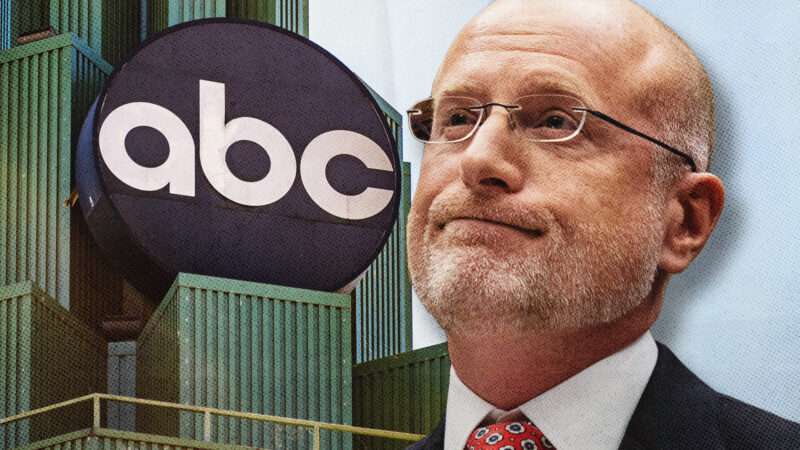
A federal judge on Wednesday ordered a halt to an unprecedented early review of the broadcast licenses held by ABC-owned stations, saying it posed an “existential threat” that was apt to have a chilling effect on the TV network’s constitutionallly protected editorial decisions. Loren AliKhan, a Joe Biden appointee on the U.S. District for the District of Columbia, issued a preliminary injunction after concluding that ABC is likely to prevail in its claim that the Federal Communications Commission (FCC) violated the First Amendment by retaliating against the stations for speech that offended President Donald Trump and FCC Chairman Brendan Carr.
“Given the extreme, indeed existential, nature of the possible penalty Plaintiffs face—loss of their broadcast licenses—the court concludes that early license renewal proceedings create a risk sufficient to chill a broadcaster of ordinary firmness,” AliKhan writes. “No one doubts that the Commission may enforce the law in the manner it sees fit. But in doing so, Defendants may not retaliate against or punish Plaintiffs and other broadcast license holders for disfavored speech.”
AliKhan “saw the FCC’s attempts to punish ABC for what they are: a campaign of intimidation and retaliation against speech that displeases Donald Trump,” Seth Stern, chief of advocacy at the Freedom of the Press Foundation, said in an emailed press release. “The First Amendment does not allow government officials to appoint themselves the journalism or comedy police. The Constitution recognizes that even good-faith government actors cannot adjudicate journalistic merits without letting political agendas cloud their judgment, and Brendan Carr is far from a good-faith actor.”
Last April, the FCC announced that it was reviewing the licenses of all eight TV stations owned by ABC: WABC in New York, KABC in Los Angeles, WLS in Chicago, WPVI in Philadelphia, KTRK in Houston, KGO in San Francisco, WTVD in Durham, North Carolina, and KFSN in Fresno, California. That announcement came years before the licenses ordinarily would be up for review. The FCC had not invoked its early-review authority in more than half a century, and it had never before simultaneously reviewed all the licenses held by one network’s company-owned stations.
The official justification for the FCC investigation was the concern that Disney, which owns ABC, had violated the agency’s “equal employment opportunity regulations” by engaging in discrimination under the banner of “diversity, equity, and inclusion” (DEI). But Carr made it clear that the review would also consider the broader question of whether ABC’s stations were complying with their vague statutory obligation to operate in “the public interest”—a standard he thinks precludes programming decisions that he deems biased against the president.
The context of the license review showed that Carr’s concerns extended far beyond the “invidious forms of DEI discrimination” he perceived. For nearly a decade, Trump has been threatening to revoke broadcast licenses in response to news coverage he views as unfair and unbalanced, frequently complaining about ABC specifically.
On September 11, 2024, the day after Trump’s presidential debate with Democratic nominee Kamala Harris, which was moderated by ABC News, he complained that it was “a rigged deal” and condemned ABC as “the most dishonest news organization,” adding that “they ought to take away [ABC’s] license for the way” it had conducted the debate. The month after the debate, Trump reiterated that “ABC should lose its license” because of “what they’ve done.” Shortly after taking office as the FCC’s Trump-appointed chairman, Carr reopened an investigation of the charge that ABC’s fact checking during the debate qualified as “broadcast news distortion”—a claim the agency had previously deemed groundless.
“ABC & NBC FAKE NEWS” are “two of the worst and most biased networks in history” because they “give me 97% BAD STORIES,” Trump complained on Truth Social in August 2025. “THEY ARE SIMPLY AN ARM OF THE DEMOCRAT PARTY AND SHOULD, ACCORDING TO MANY, HAVE THEIR LICENSES REVOKED BY THE FCC. I would be totally in favor of that because they are so biased and untruthful, an actual threat to our Democracy!!!”
Trump reiterated that threat an hour later. ABC and NBC are “two of the absolute
worst and most biased networks anywhere in the World,” and they “should lose their Licenses for their unfair coverage of Republicans and/or Conservatives,” he said. “Crooked ‘journalism’ should not be rewarded, it should be terminated!!!”
The following month, late-night comedian Jimmy Kimmel delivered a monologue on his ABC talk show in which he erroneously suggested that conservative activist Charlie Kirk’s assassin was a Trump supporter. Two days later, Carr publicly threatened ABC stations with fines or license revocation if they failed to punish Kimmel for his ill-informed but constitutionally protected remarks. ABC and its affiliates immediately fell in line by suspending Kimmel’s show for a week—the punishment that Carr had recommended.
Trump was unsatisfied by that outcome. “I can’t believe ABC Fake News gave Jimmy Kimmel his job back,” he said. “I think we’re going to test ABC out on this.”
The FCC “should look into the license of NBC, which shows almost exclusively positive Democrat content,” Trump wrote on Truth Social in October 2025. “Likewise, ABC Fake News—About the same thing, 97% negative to Republicans!”
At a press conference that November, Trump re-upped his complaint. “I think the license should be taken away from ABC because your news is so fake and it’s so wrong,” he told Mary Bruce, the network’s chief White House correspondent. “And we have a great commissioner, the chairman, who should look at that because I think when you come in and when you’re 97 percent negative to Trump, and then Trump wins the election in a landslide, that means obviously your news is not credible and you’re not credible as a reporter.”
The next day, the White House issued a press release, headlined “ABC ‘News’ Is Fake News,” averring that “ABC ‘News’ is not journalism—it’s a Democrat spin operation masquerading as a broadcast network.” The White House said “the network’s longstanding commitment to hoaxes, character assassinations, and outright fiction targeting only one side of the political aisle is a deliberate deception to wage war on President Trump and the millions of Americans who elected him to multiple terms.”
Trump followed that up with another Truth Social post four days later. “ABC & NBC, in particular, are a disaster—A VIRTUAL ARM OF THE DEMOCRAT PARTY,” he said. “They should be viewed as an illegal campaign [of] the Radical Left. NO EXPANSION OF THE FAKE NEWS NETWORKS. If anything, make them SMALLER!”
Trump revisited that theme in December. “If Network NEWSCASTS, and their Late
Night Shows, are almost 100% Negative to President Donald J. Trump, MAGA, and the
Republican Party, shouldn’t their very valuable Broadcast Licenses be terminated?” he wrote. “I say, YES!”
A month later, the FCC launched an investigation of the ABC talk show The View, casting doubt on its longstanding exemption from the agency’s “equal time” rule, without which interviews with political candidates would be legally perilous. “For years,” Carr complained on X in January, “legacy TV networks assumed that their late night & daytime talk shows qualify as ‘bona fide news’ programs—even when motivated by purely partisan political purposes. Today, the FCC reminded them of their obligation to provide all candidates with equal opportunities.”
Trump had frequently criticized The View, and Carr shared his antipathy to the show. “Once President Trump has exposed these media gatekeepers and smashed this facade, there’s a lot of consequences,” Carr remarked in July 2025. “I think the consequences of that aren’t quite finished. And look, The View‘s got a lot of challenges there.”
Last April, Kimmel offended the president again, this time by making a joke alluding to Trump’s age and his wife’s feelings about their marriage. Trump condemned that “really shocking” bit on Truth Social, saying, “Jimmy Kimmel should be immediately fired by Disney and ABC.” The FCC announced its early review of ABC licenses the very next day.
In July, ABC and NBC declined to air a primetime speech by Trump. Those decisions were unremarkable given a long line of similar judgment calls by TV networks under administrations of both parties. But Trump was outraged.
“NBC and ABC fake news have both said that they would not cover this speech,” Trump said during the address, which included dubious claims about election fraud. “They knew what it was about” but decided not to broadcast it “because of the fact that they don’t like the topic, because they know how corrupt our system is and they don’t want to reveal it,” he averred. “They and others in the media are part of a plot.” He added that “fraud like this should mean a revocation of their licenses.”
Carr lent support to that suggestion at a press conference the following week. “When you have the president of the United States standing inside the White House delivering an important speech, I think that’s something that broadcasters should be carrying,” he said. He added that “Disney’s decision there” would be one of the “points raised” during the ABC license review.
“The decision by broadcasters to carry or not carry the speech is something that is likely to be raised by petitioners that are seeking to have the FCC not renew the license for the Disney ABC stations,” Carr explained in a subsequent interview. “We are looking into this question itself about the decision to air programming or not.”
Carr, in short, seems to share Trump’s understanding of ABC’s “public interest” obligations, which the president thinks the network has violated by fact-checking him, covering him in a way he does not like, declining to give him the attention he thinks he deserves, and airing speech that irks him, including criticism and jokes at his expense. In light of Trump’s anti-ABC rants and the FCC chairman’s evident agreement with his beef, it is not surprising that AliKhan saw merit in the network’s argument that the commission’s threat to put its stations out of business was motivated by a desire to punish conduct protected by the First Amendment. That history reveals the ABC proceedings as part of Trump’s broader attempt to weaponize the FCC against his opponents.
The ABC license review is “more intrusive, burdensome and extreme than anything I observed as a chairman,” Mark Fowler, who chaired the FCC during the Reagan administration, said in a declaration supporting the network’s lawsuit. “The blatant interplay between presidential complaints respecting ABC’s broadcast content and subsequent [FCC] punitive actions,” he added, “define[s] the Chairman as a biased political operative with a personal stake and bias in this case’s outcome. Never in its history has the agency ever acted so corruptly and unlawfully to intrude on broadcasters’ First Amendment rights.”
The threat of license revocation, AliKhan notes, already has had an impact on ABC’s programming decisions. In response to Carr’s “equal time” investigation, ABC said, it “must now evaluate any invitation to a political candidate for its potential consequences, including whether it might later be cited by the Commission as a basis for non-renewal in the Stations’ impending license renewal proceedings.” The View‘s producers started avoiding interviews with political candidates and even began eschewing clips of politicians that might provoke FCC scrutiny. Kimmel’s show likewise decided not to air an interview with James Talarico, then a U.S. Senate candidate, which was instead shown on YouTube.
“The impact of the FCC’s censorship spree has not been limited to ABC or other outlets Carr has pursued directly,” Stern said. “He has put broadcasters on notice that if their coverage provokes a Truth Social tantrum, the FCC may deem hurting the president’s feelings contrary to the ‘public interest’ and come after them with bogus investigations. Outlets that Carr has intimidated can breathe a little easier. The lesson to learn from this ruling is don’t cave to Carr or any other anti-speech bullies in this administration. Instead, take them to court—the judiciary is on to them, and they lose regularly.”
The post A Federal Judge Blocks the FCC's Review of ABC's Licenses, Saying It Likely Violates the First Amendment appeared first on Reason Magazine.
]]>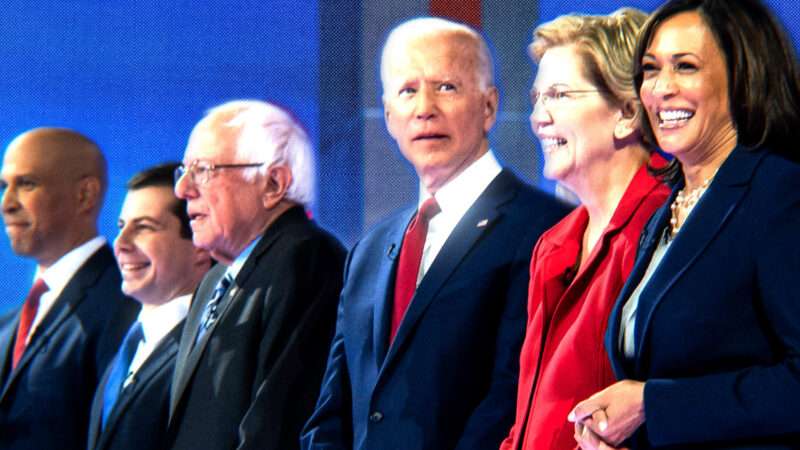
Clear your calendar for 2027 and 2028, because there will be 12 Democratic primary debates to watch, starting in June.
The punishing primary debate schedule is just part of the Democratic National Committee’s (DNC) recently announced plan for the 2028 presidential election. And while sitting through 12 Democratic primary debates seems nightmarish (think of all the corny, engineered viral moments we will be subjected to), a more rigorous primary process is preferable to a virtually nonexistent one like the Democrats pulled in 2024.
The DNC also wants to make sure these 12 debates attract the maximum number of eyeballs, and the organization says it “will seek to maximize the viewership of the debates, including by incorporating creators and influencers into the debate process.” The announcement has already caught the attention of Hasan Piker, who wrote on X, “the debate will include creators and influencers you say?” According to The Washington Post, some influencers and content creators are already considering getting involved. Brian Tyler Cohen, president of the Chorus Creator Incubator program (which tech journalist Taylor Lorenz reported was funded by a liberal dark money group), said it is “long past time for independent media and a creator” to host a debate, according to the Post.
The DNC has not clarified how exactly influencers will be involved in the debate process (tiny microphones for everyone? Best TikTok creator wins?). But it does state that candidates cannot “participate in events in which two or more candidates share the stage, whether virtually or in-person, and answer questions.” Candidates who participate in such unsanctioned debates would be disqualified from future sanctioned debates. While new media and podcasters can be a democratizing force, an influencer-led debate would likely turn a political debate into an even more vapid spectacle than usual. Will candidates have to face a circle of critics on Jubilee? Will they all have to sit down with the SubwayTakes guy? Crafting a smart social media strategy worked for a mayoral candidate like current New York City Mayor Zohran Mamdani. But if candidates do not propose things that resonate with voters (even if those policies are misguided and impractical), a Brat-style, “Hotties for Harris” campaign is likely not going to land.
As another part of the DNC’s efforts to run “a 2028 presidential primary process that is transparent, fair, and rigorous,” the organization is also asking candidates to denounce dark money spending to qualify for these debates. While the DNC acknowledges that it cannot legally ban dark money and super PAC groups, it says that “a uniform denunciation statement will be provided for each campaign to complete upon notification of spending that violates the pledge.” The pledge won’t apply to the general election.
“You want to lead this party? Go earn it – with voters, not dark money,” DNC chairman Ken Martin wrote on Substack Tuesday.
Earning votes in 2028 will likely be more difficult than during the midterms, when Democrats were able to win support from those dissatisfied with President Donald Trump’s war in Iran and high gas prices. While adding more independent media voices to the debate process could be edifying for voters, it would be foolish for Democrats to think that social media appearances and debate performances alone will secure their nomination. Voters are results oriented. Then again, self-reflection has not been Democrats’ strong suit.
The post DNC Unveils 2028 Primary Plans: 12 Debates, Influencers, and No Dark Money appeared first on Reason Magazine.
]]>
When Congress reduces the criminal penalties authorized or mandated by federal law, it usually does not make those changes retroactive. That means people sentenced before the new law took effect continue to serve prison terms that legislators subsequently deemed excessive, which makes no logical or moral sense. As Reason‘s C.J. Ciaramella notes in his recent story about one such prisoner, that situation inspired a judicial solution that the Supreme Court deemed out of bounds last May in Rutherford v. United States: resentencing based on “extraordinary and compelling reasons” under the FIRST STEP Act.
The judges who embraced that approach included Ketanji Brown Jackson, whom then-President Joe Biden nominated to the Supreme Court in 2022. Jackson’s legally controversial use of the FIRST STEP Act figured in the confirmation debate, and she was one of three dissenters in Rutherford. Her position on the issue highlights the perverse consequences of legislative compromises that might be politically convenient but defy basic principles of justice.
The FIRST STEP Act, which President Donald Trump signed into law in December 2018, changed federal sentencing in several ways. It reduced enhanced penalties for repeat drug offenders under 21 USC 841(b) and 21 USC 960(b), expanded the “safety valve” that allows certain nonviolent offenders to escape mandatory minimums, and barred prosecutors from “stacking” charges under 18 USC 924(c), which applies to a defendant who “uses or carries” a firearm “in furtherance of” drug trafficking or a violent crime. Section 924(c) prescribes lengthy prison sentences for drug offenders who own guns, even if they never use them to threaten or harm anyone.
The FIRST STEP Act passed with broad, bipartisan support. The vote was 87 to 12 in the Senate and 358 to 36 in the House. In other words, legislators overwhelmingly agreed that the existing penalties were too severe. Yet the law did not make the revised penalties for drug offenders retroactive, meaning they applied only to defendants sentenced after the law took effect.
That choice was especially puzzling because the same law retroactively applied the shorter crack cocaine sentences prescribed by the Fair Sentencing Act of 2010—a provision that benefited about 4,000 prisoners who had been convicted before Congress approved the earlier law. But the FIRST STEP Act included another provision that many federal judges saw as a solution to the disparities created by nonretroactive sentencing reforms. It allowed prisoners to seek “compassionate release” for “extraordinary and compelling reasons”—a process that previously had to be initiated by the Bureau of Prisons.
Could a striking difference between the sentence someone received and the sentence he would have received under current law count as “extraordinary and compelling”? Jackson, then a judge on the U.S. District Court for the District of Columbia, thought so.
In July 2018, Jackson sentenced Keith Young, who had been convicted of possessing with intent to distribute one kilogram or more of heroin, to 20 years in federal prison. That penalty was mandatory once prosecutors noted Young’s prior conviction for possession with intent to distribute cocaine, which qualified as a “serious drug felony.” Otherwise, Young’s sentence would have been half as long.
Five months later, the FIRST STEP Act changed the definition of “serious drug felony,” excluding defendants who were released from prison more than 15 years before the new offense. That category included Young, who filed a motion for resentencing under the law’s “compassionate release” provision in September 2020.
Like many other prisoners who filed such motions during the pandemic, Young argued that he should be released in light of the danger posed by COVID-19, citing his asthma and smoking history as factors that made him especially vulnerable to the disease. But he also noted that he “would not be subject to a 240-month mandatory minimum today,” saying “this change in law additionally warrants compassionate release.” Jackson agreed with the latter argument and resentenced Young to 10 years.
Sen. Tom Cotton (R–Ark.) grilled Jackson about that decision during her Supreme Court confirmation hearing, portraying her as soft on drug dealers. Jackson said she found it “extraordinary and compelling” that “between the 20-year sentence that I gave [Young] originally and the compassionate release motion that he filed, Congress changed the law.” It decided that “the old crime was no longer eligible for the increase, so that a person who was convicted at the time of his compassionate release motion for doing exactly what Mr. Young had done would not get a 20-year sentence.”
Jackson noted that “one of the things that Congress says to the judges” is that they should “care about unwarranted sentencing disparity,” meaning they should “care about the fact that the person you’re sentencing is being treated differently than someone else who committed exactly the same crime.” Although the statutory change in the treatment of repeat drug offenders “wasn’t retroactive,” she said, “here I have a defendant before me, and all of the factors that Congress has asked me to take into account, and a compelling argument that there were extraordinary and compelling circumstances—that is, a change in the law—that would create unwarranted sentencing disparity if I didn’t take account of it.”
While Cotton was one of the 12 senators who voted against the FIRST STEP Act, critics of Young’s resentencing also included Sen. Chuck Grassley (R–Iowa), the bill’s chief sponsor in the Senate. As Grassley saw it, Jackson improperly substituted her policy judgment for the one reflected in the FIRST STEP Act.
“Judge Jackson said she based her ‘extraordinary [and] compelling’ finding on the nonretroactive change in the law,” Grassley said during a meeting of the Senate Judiciary Committee. “This is a terrible and dangerous interpretation. Congress chose…which provisions of the FIRST STEP Act would apply retroactively…The Senate is currently considering legislation that I cosponsored with [Sen. Richard Durbin (D–Ill.)] that makes some of the FIRST STEP Act retroactive. But Congress must make that change.”
Jackson’s shortcut reflects “a radical position,” Grassley said, “and it’s outside of the confines of law.” Yet Jackson was by no means alone in taking that position, and federal appeals courts were split on the question of whether it was valid. The U.S. Sentencing Commission lent support to Jackson’s reading of the law in 2023, when it amended its guidelines regarding what counts as “extraordinary and compelling.”
If a defendant “received an unusually long sentence and has served at least 10 years of the term of imprisonment,” the commission said, “a change in the law (other than an amendment to the Guidelines Manual that has not been made retroactive) may be considered in determining whether the defendant presents an extraordinary and compelling reason, but only where such change would produce a gross disparity between the sentence being served and the sentence likely to be imposed at the time the motion is filed, and after full consideration of the defendant’s individualized circumstances.”
The Supreme Court resolved this legal dispute in Rutherford. The case involved two defendants who had been sentenced under Section 924(c) prior to the FIRST STEP Act. One of them, Daniel Rutherford, received a 32-year minimum sentence, while the other, Johnnie Carter, received a 57-year minimum.
In both cases, prosecutors charged multiple violations of the statute, which triggered the 25-year minimum for repeat offenses. The FIRST STEP Act disallowed that practice, requiring prior convictions under Section 924(c). If Rutherford and Carter had been sentenced after that law took effect, their sentences would have been much shorter: 14 years and 21 years, respectively.
“Obviously, Rutherford and Carter—not to mention the many other similarly situated prisoners—would like the benefit of the Act’s amendment to §924(c),” Justice Amy Coney Barrett wrote in the majority opinion. “As a rule, however, changes to sentencing statutes apply only to offenses committed after the statute’s effective date. The Act departs from this rule in a very limited respect: Its more lenient penalties apply to offenses committed before the statute’s enactment ‘if a sentence for the offense has not been imposed as of such date of enactment.’ But for defendants sentenced before the Act, the general rule of nonretroactivity remains in place.”
Federal appeals courts “remain divided over whether the disparity created by a nonretroactive change to sentencing law, like the Act, can constitute an ‘extraordinary and compelling reaso[n]’ that ‘warrant[s]’ compassionate release,” Barrett noted before concluding that it cannot. “‘Extraordinary and compelling’ reasons for compassionate release are those that are especially unusual and convincing. The disparity created by Congress’s amendment to §924(c) does not satisfy this definition.”
That disparity is not “extraordinary” because “nonretroactive amendments to criminal penalties are the norm,” Barrett wrote. “‘Ordinarily,’ we have explained, ‘statutory
changes to federal penalties only benefit future offenders.'”
Nor is the disparity “compelling,” Barrett said: “It is hard to see how Congress’s deliberate decision not to extend newly reduced penalties to those already sentenced could be a convincing reason that ‘warrant[s]’ a reduction. As we have explained, Congress decided to apply the lower prison sentences to some violators of §924(c)—those for whom a sentence had not yet been imposed—but not others. In doing so, Congress ‘reinforced its interest in finality and avoided burdening district courts with additional litigation.’ Treating the disparity resulting from §924(c)’s amendment as a compelling reason for reducing a sentence would undermine Congress’s choice to leave the sentence intact.”
In a dissent joined by Jackson and Justice Elena Kagan, Justice Sonia Sotomayor argued that Congress empowered the U.S. Sentencing Commission to “define what constitutes ‘extraordinary and compelling reasons’ for incarcerated individuals to receive a sentence reduction under the compassionate release statute.” The question therefore was “whether the Commission acted unreasonably when it issued that guidance,” she wrote. “It did not. The Commission’s policy statement is consistent with Congress’s commands and centuries of legal practice in which courts look to the totality of the circumstances when deciding whether to modify a sentence. Because the Court concludes that the policy is unlawful, and that courts may never consider nonretroactive changes in law when deciding whether someone is eligible for compassionate release, I respectfully dissent.”
The majority, by contrast, agreed with Grassley that judges flout the will of Congress when they take into account “nonretroactive changes in law.” Whatever your take on that legal issue, it is notable that Grassley himself favors retroactivity, as he emphasized in 2022.
If fair punishment is the main concern, it is hard to understand why Congress would decide that penalties for certain offenses are excessively severe yet force current prisoners to continue serving sentences it now considers unjust. Yet that is what Congress did, and Grassley argued that such inconsistency was the price of winning approval for the FIRST STEP Act. “The compromise that I brokered with Sen. Durbin on the FIRST STEP Act,” he said, “wouldn’t have been possible if we thought that the activist judge would insert their own views into the law. Decisions like [Young’s resentencing] represent serious separation-of-powers concerns and will make bipartisan work harder in the future.”
Such compromises may indeed be politically necessary to accomplish marginal improvements in criminal penalties, which can add up to decades even for nonviolent defendants whose offenses violated no one’s rights. But at some point, legislators ought to reconsider the morally dubious “norm” that Barrett described, which entails a default contradiction between the punishment that Congress currently deems appropriate and the punishment imposed on “many other similarly situated prisoners.”
The post Why Prisoners Keep Serving Sentences That Congress Has Deemed Unjust appeared first on Reason Magazine.
]]>
When you speak with him, Richard Daniel keeps using the words “grateful” and “blessing.”
A judge freed the 44-year-old Miami man from federal prison in 2024 after Daniel served 22 years of a 60-year mandatory minimum sentence. Since then, Daniel has seen divine providence everywhere in his life, from the mundane to the extraordinary. He says it’s a blessing to run errands for his elderly mother on Saturdays and that it was a blessing when he hit two jackpots on the same slot machine last winter, winning roughly $40,000. The money allowed him to buy a car and rent an apartment of his own, a short walk from his mom’s place in the same complex.
His other blessings include a steady construction job, a good probation officer, and a strong work ethic, all of which have helped him overcome the daunting challenges of rebuilding a life after prison—something that tens of thousands of formerly incarcerated people every year fail to do.
By any metric of rehabilitation, Daniel has succeeded. But for all his effort and whatever one calls the string of events that got him to this point—chance, fate, the hand of God—he stands to lose it all.
This May, the Supreme Court ruled that federal judges didn’t have authority to reduce long mandatory minimum sentences like Daniel’s. The ruling reversed judges’ orders shortening the sentences of a handful of federal offenders who’d managed to get relief in the brief period after the First Step Act was passed in 2018 and before the Court’s decision shut that legal avenue down.
Now federal appeals courts are beginning to send some of those men back to prison. On Monday, the U.S. Court of Appeals for the 11th Circuit ordered a lower district court to reinstate the life sentence of Rodney Taylor, who benefited from the First Step Act and was released in 2025 after a judge granted his motion for relief. Taylor served 21 years of a mandatory life sentence for being a felon in possession of a firearm.
The Court’s order in Taylor’s case is dire news for Daniel. Federal prosecutors’ appeal of his resentencing was paused pending the outcome of Taylor’s case, but the clock is ticking again.
Daniel got the freedom he prayed so long for, but with an unexpected and suddenly looming expiration date.
“I knew that God was with me the whole time,” Daniel says. “He’s been with me my whole entire incarceration, so I knew that as long as I work hard, do right by people, be honest, be righteous, I’m going to get what I’m asking for, which is independence, stability, and everything that comes with it. That’s why it’s just so difficult to have this big, heavy cloud hanging over my head. I’m doing all that I can to just maintain focus and control what I can control.”
Shanna Rifkin, general counsel for the criminal justice reform group FAMM, says her organization has identified 13 people, including Daniel and Taylor, who were released from federal prison but now face the prospect of returning to serve out sentences that both Congress and federal judges found excessively long.
Rifkin says these men have reconnected with their families and started new jobs. Some bought their own homes. One man was elected a deacon at his church.
“What’s so unjust about these cases is that they are doing everything that we would hope that people would do when they come home from prison,” Rifkin says. “They are living proof of their rehabilitation, and yet they are facing the unimaginable prospect of having to go back to prison after doing all of that hard work.”
‘Never Look Back’
I met Daniel on an October evening at his mother’s apartment in Fort Lauderdale, Florida. He was stuck in traffic coming back from his construction job, where he does demolition work and cuts concrete.
While I waited, I chatted with his mother, Anne Daniel. Anne, 71, immigrated from Haiti in the 1970s and has seven children. She is a devout Catholic and wears a wooden rosary. Despite her age, she still works as a caretaker, looking after other senior citizens, but she hopes to retire soon.
Daniel helps support his mother both physically and financially. One of her knees is visibly swollen, and she has trouble walking. She says she needs surgery to fix it.
After Daniel got back from work, we walked around the corner to his small but tidy apartment. Daniel is tall. He has a broad smile and big dreadlocks that he wears up. He’s funny and personable. He dotes on his mother. He doesn’t have the demeanor of someone who spent 22 years in high-security U.S. penitentiaries or someone who committed a crime worth a 60-year sentence.
Daniel’s long sentence was the result not of a particularly heinous offense or lengthy criminal record, but of an infamous quirk in the federal criminal code that, before Congress changed the law, allowed prosecutors to “stack” multiple gun charges under a single indictment.
Daniel was 20 years old in 2002 when he and his older brother were arrested for selling marijuana, cocaine, and stolen guns to a confidential informant on several occasions. At trial, a jury convicted Daniel of eight federal drug and gun offenses, including possession of a firearm in furtherance of a drug trafficking crime.
That last charge, 18 USC 924(c), previously carried a five-year mandatory minimum prison sentence for the first offense, with each subsequent offense carrying a 25-year minimum. Because the law required sentences to be carried out back-to-back rather than concurrently, and because each 924(c) charge in a single indictment counted as a prior, defendants could be sentenced to hundreds of years in prison for a first-time offense, even if they never brandished or threatened anyone with a gun.
Daniel had no felony record and only three misdemeanor convictions—two for marijuana possession and one for resisting an officer without violence. But because the prosecutors in his case stacked several 924(c) charges, in addition to other offenses that carried mandatory minimums, the judge presiding over his case had no choice but to sentence Daniel to 60 years in federal prison.
Another notorious 924(c) case involved Weldon Angelos, a 24-year-old Utah record producer who received a 55-year mandatory minimum sentence in 2004 for selling marijuana to an undercover agent three times. Because Angelos had a gun on him during two of the sales and police found guns in his home, prosecutors stacked three 924(c) charges against him. Angelos was released in 2016 after prosecutors declined to oppose his petition for resentencing.
Cases such as Angelos’ persuaded Congress to rewrite the statute as part of the First Step Act of 2018, a large criminal justice reform bill. Now the 25-year mandatory minimum applies only to defendants with a 924(c) prior conviction, not just a stacked charge.
Congress didn’t make those changes retroactive, though, leaving sentences like Daniel’s intact, even though the amendments were tacit admissions that lawmakers thought they got it wrong. If Daniel were convicted today on identical drug and firearms charges, he would face a mandatory minimum sentence of 180 months in prison, not 660.
“Imagine the person who’s stuck in prison and has to live with the fact that if they were sentenced today, they would receive half a century less time than when they were sentenced, but they know that there’s nothing they can do about that,” Rifkin says. “There is nothing that undermines the legitimacy in our criminal justice system more than knowing that your sentence is patently unjust, but no one has changed it.”
But another provision of the First Step Act allowed federal inmates to petition judges directly for “compassionate release”—a policy that allows offenders to be released from federal prison early based on circumstances such as terminal illness or being the sole caretaker for a family member. In 2023 the U.S. Sentencing Commission also issued guidelines expanding the criteria that federal judges could consider “extraordinary and compelling” reasons to assess compassionate release. One of the new criteria was “unusually long sentences.”
Daniel filed motions in 2023 and 2024 seeking a sentence reduction, focusing on the gross disparity between the current law and his original sentence. Daniel’s lawyers argued that “he has spent the last two decades trying to better himself, despite receiving a sentence that would otherwise release him, with good time credit, at age 72.”
Federal prosecutors opposed Daniel’s petition, arguing that his convictions, his alleged involvement with a gang as a young man, and his disciplinary record in prison, which included a string of infractions for fights and drugs, showed that he was a continuing danger to society, despite the “nonviolent” category of his offenses.
Yet U.S. District Judge Cecilia M. Altonaga ruled in Daniel’s favor in June 2024, finding that the disparity between Daniel’s original sentence and what he would receive for identical conduct today was indeed gross. Altonaga also noted that Daniel hadn’t had any disciplinary infractions at all in three years, none for drugs in nearly five years, and none for violence in nearly a decade; she wrote that she found it “compelling that, given the extensive time remaining in [Daniel’s] sentence and his previous inability to obtain a sentence reduction, [Daniel’s] good behavior has occurred without the hope of early release.”
Daniel was released from Federal Detention Center Miami that August after he was resentenced to 280 months, which amounted to time served, and five years of post-release supervision. He says he gave away his prison belongings and walked out with nothing but a Bible and his legal documents. As he was leaving, he says, he could hear the other inmates telling him not to look back.
“We always had that saying: When you’re getting released, never look back at the prison,” Daniel says. “Because all that’s going to do is bring you right back to it. I just kept my head focused, moving forward.”
The first thing Daniel did after his release was call up a friend to drive him to his mother’s apartment to surprise her.
“I’m just hoping and praying on my way down that she doesn’t faint,” Daniel recalls.
It was a rainy evening when he knocked on Anne Daniel’s door. She asked who was there, but no one answered.
“Three times, he knocked and didn’t say nothing,” Anne says. “When I opened the door…oh, my God. I’m screaming. I’m crying. It was a big miracle for me when God sent me Richard. He said, ‘I came home for you, Mom.’ He bent his knees and said, ‘Mom, pray for me.’ I raised my hand to his head. I prayed for him. I thanked God for him coming back.”
“She cried all night,” Daniel says. “There was a little recliner right next to the couch. She just slept there on that couch, and I sat on the La-Z-Boy. And I just held her hand the whole night. We slept just like that the whole night.”
There wasn’t much time to celebrate. Anne had work the next morning, and her son had to find a job.
Jackpots
“Being out [of prison] at age 43, it was a big deal for me,” Daniel says. “I had to prove to myself that I can do this, and do this in the right direction, right path.”
Daniel says he got a job his first week after being released from prison. Without a car, he had to take multiple buses to work, leaving at 4 a.m. or earlier.
His first two jobs each fell through after several months because of his lack of a car, but then he found a construction job that offered transportation. Still, life was tough sleeping on his mom’s couch.
Then, one Saturday last December, Daniel was at a South Florida casino, where he occasionally goes on weekends to play slots and relax. He says he had started with $50 or $60 and was down to $20 when he hit the jackpot.
“I’m looking at the bottom of the machine as it’s tallying up the number,” Daniel says. “It quickly went to like $5,000, $6,000, $11,000. And it kept going. It kept going. It just wouldn’t stop.”
The number when it finally stopped: $34,000.
Daniel took the payout in cash, called a friend to drive him to a used car lot, and bought an SUV for half the listed price. He used the rest of the money to rent an apartment and continue helping out his mom.
A couple of weeks later, Daniel hit again on the same slot machine for roughly $11,000.
Daniel keeps the casino receipts in his wallet as a reminder. “This is more than luck,” he says. “This is just blessings.”
After getting his feet underneath him, Daniel kept grinding. He works eight hours, five days a week, plus nights and weekends when there’s extra work. He says he didn’t have any construction experience, but what he lacked he made up for in willingness to work and dependability.
“I’m constantly always trying to challenge myself to show my bosses that I’m willing and able to do anything that they throw at me,” he says.
‘This Can’t Be the End of Me’
Daniel spent every day since his release trying to prove his freedom was not a mistake. But the criminal justice system was not done with him.
The Trump administration appealed several cases in which judges had resentenced defendants based on excessive sentencing disparities and the First Step Act’s compassionate release mechanism. Although the First Step Act was one of President Donald Trump’s major legislative victories in his first term, the administration argued that the U.S. Sentencing Commission abrogated the will of Congress when it issued guidance to federal judges in 2023 that unusually long sentences could constitute a compelling reason for compassionate release.
The Supreme Court agreed, ruling in May along 6–3 ideological lines that when Congress declines to make a sentencing amendment retroactive, the resulting sentencing disparity cannot serve as an “extraordinary and compelling reason” that warrants a sentence reduction.
Besides shutting the door on future compassionate release petitions based on sentencing disparities, the ruling implicated Daniel and a dozen other men who’d already been released from prison.
Federal appeals courts have started applying the new Supreme Court precedent. On October 27, the U.S. Court of Appeals for the 11th Circuit, which covers Florida, held that the Supreme Court’s ruling required it to reverse a sentencing reduction in the case of Abel Rizo, another 924(c) defendant. Then, on Monday, it ruled that Taylor’s original sentence must be reinstated.
In a statement provided by Taylor’s federal public defender prior to the 11th Circuit’s ruling, Taylor said he attends weekly church services, holds down a job, and volunteers to speak to at-risk youth.
“One of the greatest blessings in my life has been reconnecting with my children and grandchildren after 22 years and three months apart,” Taylor, who is currently in home confinement in Georgia, said. “I am grateful for the opportunity to be present in their lives and to build meaningful relationships with them.”
Another man facing return to prison, Damian Smith, was released 16 years into a 42-year sentence for two armed robberies he participated in as a teenager. “I’m out here trying to live, trying to do what I’m supposed to do,” Smith told The Free Press. “I didn’t do all this to have to go back to prison, you know?”
As it stands, Daniel and the other men have no way of avoiding prison other than intervention from the White House.
“What FAMM really wants is to see these individuals be able to stay home because they are living proof of rehabilitation,” Rifkin says. “The Supreme Court spoke, and it’s the law of the land now, whether we like it or not, so FAMM is pushing for the president to commute these sentences.”
Daniel’s mother becomes deeply distraught at the thought of losing him again, and her son worries about her well-being if he goes back.
And there’s more than that. He would lose the friends, co-workers, and acquaintances he’s come to know around the neighborhood, people who’ve watched his progress and cheered him on.
He’s also starting to do well enough to think about a life beyond work and sleep. He’s a talented portrait artist, a skill he honed in prison art classes, and he wishes he could find the time to paint more.
Daniel approaches all this as stoically as he can. “I can’t do anything about it but just be grateful, be hopeful, and just continue doing what I’m doing,” he says.
Still, it’s incomprehensible to him that he could come so far and be showered with so many blessings only to have this dreamlike life end back in prison.
“I prayed for days like this,” he says, sitting in his apartment with his mom in a chair beside him and with his brother Denny nearby. “So many years I just used to sit on my bunk and stare at the sky wondering, ‘Would I ever see that again? This can’t be the end of me.'”
The post He Served 22 Years of a 60-Year Prison Sentence and Rebuilt His Life. Now the Supreme Court Says He Must Go Back. appeared first on Reason Magazine.
]]>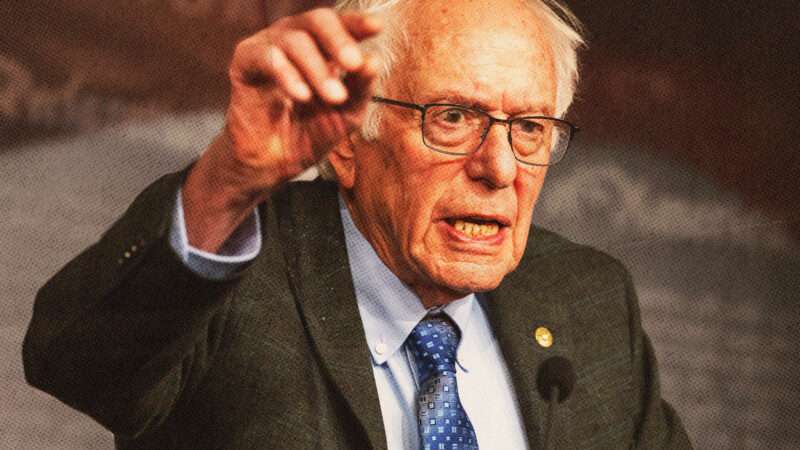
Following the Democrats’ sweeping midterm wins, an elated Sen. Bernie Sanders (I–Vt.) has a new favorite talking point.
“We have the highest rate of childhood poverty of any major nation,” said Sanders on MS NOW last week. The claim was repeated on CNN, where Sanders argued “this election was” a “crying out on the part of the American people for change” and that “we have the highest rate of childhood poverty of any major country on Earth.” Sanders made the same claim in a pre-election video, arguing that Republicans “don’t give a damn that we have the highest rate of childhood poverty of any major country,” and again in an op-ed in The Guardian, where he argued for Sen. Chris Van Hollen (D–Md.) to replace Sen. Chuck Schumer (D–N.Y.) as Senate majority leader. Sanders uses these striking statistics to make the case for a much bigger role for government in various areas, including in healthcare.
It is an effective political talking point, and one that Sanders has used since at least the 1990s. However, it doesn’t tell the whole story.
The Organisation for Economic Co-operation and Development’s (OECD) latest comparable figures place the United States fourth-highest in child poverty among developed countries, at about 22 percent, which is behind Costa Rica, Israel, and Spain. While this certainly isn’t the “highest,” as Sanders claims, it is still pretty high, and would be cause for concern if it weren’t for the fact that it is a measurement of relative poverty. The OECD defines relative poverty as “living in a household with an equivalised post-tax-transfer income below 50% of the national annual median.” In other words, a child is considered poor if their household earns less than half the median income in their own country.
However, the problem is that relative poverty tells us little about how living standards compare internationally—an American child might be considered poor under this metric, but have a higher standard of living than much of the world.
A 2019 report from the National Academies of Sciences, Engineering, and Medicine (NASEM) compared childhood poverty rates in five developed countries using both relative and absolute poverty measures (the latter of which measures whether someone’s income falls below a fixed poverty threshold, rather than how their income compares with others in their country). In relative poverty, the United States (20.1 percent) lags behind Canada (17.8 percent), Australia (13.7 percent), Ireland (10.1 percent), and the United Kingdom (8.1 percent). However, America’s absolute childhood poverty rate was 12.5 percent. When adjusting for purchasing power, the United Kingdom had a higher childhood poverty rate than America, at 13.5 percent, while Ireland (11.3 percent), Canada (10.3 percent), and Australia (8.1 percent) had lower rates. So, America’s childhood poverty looks rather different when children’s household incomes are compared against the same standard instead of each country’s national median.
The reason for this massive disparity between absolute poverty and relative poverty is simple—America is a far richer country. In the NASEM study, the same absolute poverty line was equivalent to 40.2 percent of median household income in America, compared with 40.3 percent in Canada, 40.7 percent in Australia, 55.5 percent in Britain, and 51.8 percent in Ireland. Americans earn far more than their British and Irish counterparts, so the income threshold needed to be considered “poor” under a relative measure is much higher.
A more recent 2022 study using Luxembourg Income Study data reached similar conclusions. Comparing absolute childhood poverty across 23 countries using the same purchasing-power-adjusted U.S. poverty threshold, researchers found that 12 percent of American children lived in poverty, compared with 14.2 percent in Britain, 15.5 percent in France, 29.4 percent in Israel, and 36.1 percent in Italy.
So what does the data show us? While the U.S. may not be a top performer in all poverty metrics, it is certainly not performing nearly as poorly as Sanders says it is. On other metrics, the U.S. is a top performer—it’s ranked fourth out of 132 countries in the Archbridge Institute’s social mobility index and was the third-most innovative economy in the World Intellectual Property Organization’s 2026 Global Innovation Index. The U.S. was also named the best country for startups and entrepreneurs in StartupBlink’s 2026 Global Startup Ecosystem Index. One of America’s greatest advantages is that, regardless of background, children grow up in a country with extraordinary opportunities to succeed and achieve some of the highest incomes in the world.
Indeed, the U.S. has one of the highest median disposable household incomes in the developed world, according to the OECD, even after adjusting for differences in purchasing power. The bottom 10 percent of Americans have higher average annual disposable incomes ($10,700) than the OECD average (though they are behind income earners in some “similarly wealthy countries”), according to data in an analysis by the Center on Budget and Policy Priorities.
In fact, the U.S. is so rich that Americans who are functionally illiterate earn the same as average British workers, according to the Financial Times.
Interestingly, middle-income Americans enjoy the second-highest disposable household incomes in the OECD. In 2024, Americans in the middle 20 percent had an average annual disposable income of $45,010. This is higher than the incomes of comparable households in Switzerland, Norway, Canada, Britain, France, and Germany. In America, you can earn six figures managing a chain restaurant—Panda Express, for example, advertises annual compensation packages of over $100,000 for general managers.
Over time, American children have become considerably wealthier, including those in the poorest households. A 2024 report from NASEM found that the inflation-adjusted average household resources of children in the bottom 20 percent increased by 80 percent between 1967 and 2019. Meanwhile, Columbia University research found childhood poverty fell from 29.8 percent to 9.8 percent between 1967 and 2024, measured against a fixed standard of living (even though relative childhood poverty went up over the same period).
Childhood poverty data tell a more complicated story than what Sanders is presenting. While one metric would tell you the U.S. is lagging behind the rest of the developed world, others tell you it is far exceeding expectations. What is indisputable—and what Sanders ignores—is that American children have more opportunities to create wealth and prosperity than almost anywhere else in the world.
The post Bernie Sanders Says America Has the Highest Child Poverty Rate of Any Major Country. Here's What He's Leaving Out. appeared first on Reason Magazine.
]]>
The December 2026 issue of Reason explores Argentine President Javier Milei’s accomplishments and what is yet to be done.
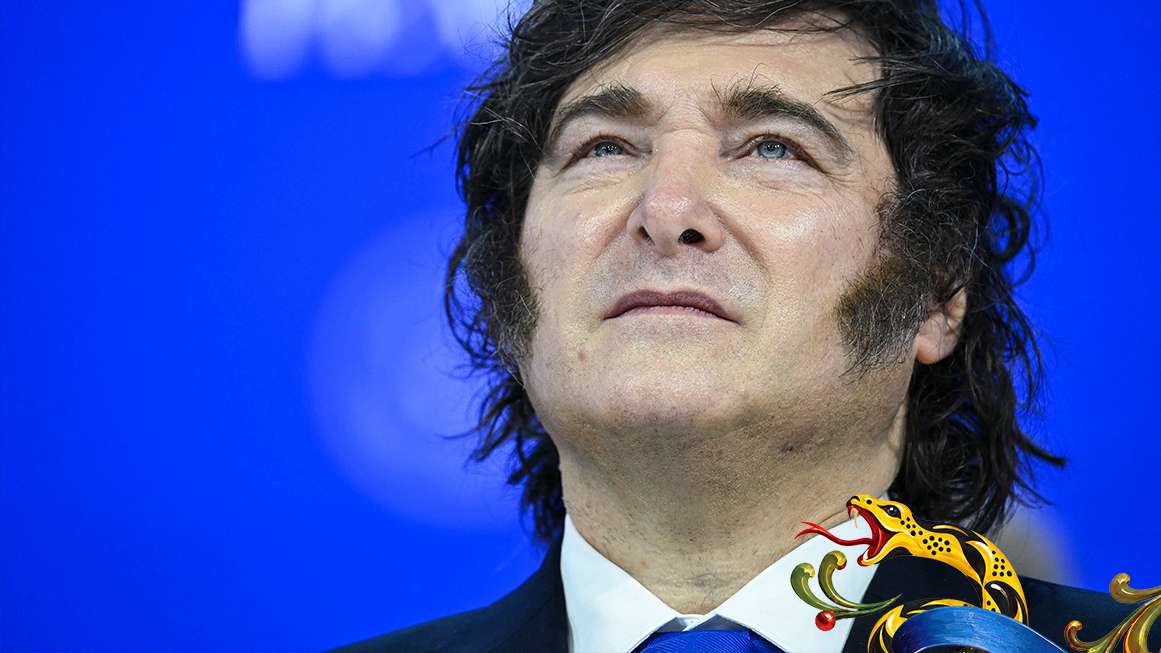
Argentine President Javier Milei is frequently grouped with the U.S.’s Donald Trump, Italy’s Giorgia Meloni, El Salvador’s Nayib Bukele, and other world leaders under the label “right-wing populists.” The comparison and the label sit uneasily with Milei’s professed libertarianism and disdain for populism.
Milei’s libertarian inclinations are very real, and quite longstanding. He calls himself an anarcho-capitalist. Murray Rothbard, the economist who helped develop and popularize the philosophy of anarcho-capitalism, is one of his heroes. (He even has a dog named Murray.)
Nor has Milei historically confined his libertarianism to economic policy. Asked about same-sex marriage during the 2023 presidential campaign, he replied: “It’s a contract between parties. What do I have to say about it? Marry whoever you want.” He went on to define classical liberalism as “unrestricted respect for the life project of others” so long as they do not violate another person’s life, liberty, or property.
On homosexuality, he has asked: If someone decides to be gay, “how does that affect my life? In nothing. My liberty? In nothing. My property? In nothing. Therefore, I have nothing to say.” On gender identity, his position was characteristically caustic but recognizably libertarian—essentially, you can identify however you please provided you do not make taxpayers pay for it.
His position on drugs followed the same logic. In an anarcho-capitalist society without a welfare state, Milei once said, drugs should be legal. “Do whatever you want with your life,” he said, so long as you do not violate anyone else’s rights or send him the bill.
Abortion is the exception: Milei has long regarded it as a violation of the right to life and therefore outside the libertarian presumption that adults should be left alone. But there has always been a subset of libertarians who hold that position. Taken as a whole, the prepresidential Milei was hardly a conventional social conservative.
So why has this hardcore libertarian surrounded himself with conservatives, adopted nationalist policies, and waged a culture war? The answer may lie with Rothbard.
Rothbard’s Plan
In January 1992, Rothbard published an essay titled “Right-Wing Populism: A Strategy for the Paleo Movement.” Libertarians, he argued, should embrace “charismatic political leadership.” Second, he thought the movement should pursue a strategy of attacking and denouncing an unholy coalition of “Big Government, Big Business, and various influential special interest groups”—in other words, a casta or deep state. Finally, he wanted to combine libertarian ideas with more conservative and nationalist ones in order to resonate with the average American.
He then proposed a political program for a libertarian movement employing a right-wing populist strategy. It should include such policies as lower taxes, reduced public spending, and the abolition of the Federal Reserve. But he also included “America First,” a plank to “unleash the cops to clear the streets of bums and vagrants,” and another defending “family values”—a clear appeal to the more conservative sectors of society. He even pointed to a then-recent bid for office by the ex-Klansman David Duke as a political model.
Whether Milei consciously followed Rothbard’s strategy is impossible to determine, but Rothbard is indisputably one of his intellectual heroes. Milei may have accomplished what a frustrated Rothbard imagined late in his career: He fused libertarian economic ideas to right-wing populist politics and won an election.
This may help explain some apparent contradictions of Milei’s presidency. Consider the influence of Agustín Laje, a young leader of the alt-right movement in Latin America. Laje is the director of Fundación Faro, a think tank created in the wake of Milei’s presidency to train future political cadres for the “cultural battle.” Milei regularly appears at his events, and Laje describes the organization’s mission as ensuring that Argentina embraces the “ideas of liberty” deeply enough that Milei’s reforms survive.
But the cultural definition of liberty promoted in that milieu looks quite different from the Milei who once said that another person’s homosexuality was simply none of his business. In a speech he delivered at Davos in early 2025, Milei denounced the “LGBT agenda” and “gender ideology”; he even tried to connect the gay rights movement to extreme cases of child abuse.
In the same speech, Milei denounced the “bloody and murderous abortion agenda.” More recently, in a speech delivered at the Council of the Americas, he remarked that “we are paying a very high price for the madness of the [feminist and pro-choice] green-handkerchief movement” and that the “passion for murdering children in their mothers’ wombs is also costing us dearly in terms of economic growth.” Again, this is a topic where Milei has long had common ground with the conservatives of his country.
Nationalism has also recently moved to center stage. After denouncing an “anti-Argentine campaign,” the national government issued an emergency decree establishing grounds for denying entry to or expelling any “foreigner who directs or incites messages of hatred, discrimination and/or violence against the Argentine people or its citizens on the grounds of their nationality, as well as any desecration of patriotic symbols.”
Nationalist instincts also come up in debates over access to universities and healthcare. Many claim that it is just not fair that the Argentine government pays for the education and health of people coming from Brazil, Paraguay, or Chile. But from a libertarian perspective, the real debate is not whether foreigners should be prevented from accessing the public system; it is whether a university education should be free of charge for everyone in the first place.
Also in line with the populist strategy proposed by Rothbard, Milei has waged a battle against much of the press, whose members, he argues, Argentines “do not hate enough.”
Milei’s Reality
Milei’s economic libertarianism remains front and center. He is not only pursuing a policy of fiscal austerity—even at considerable political cost—but also promoting deregulation, privatization, and opening the economy to international trade. He also recently submitted a bill to reform the Central Bank’s Charter, granting independence to the monetary authority and bringing it much closer to those of the low-inflation countries elsewhere in the region.
His economic program is very different from the nationalist right and can much more plausibly be placed within the libertarian economic tradition associated with his heroes Rothbard, Ludwig von Mises, F.A. Hayek, and Milton Friedman.
So what happens next?
One possibility is that the right-wing bargain becomes permanent. Milei may conclude that social conservatives and nationalists are indispensable to his political survival. If maintaining his coalition means continuing the culture war, tightening immigration policy, invoking nationalism, and accommodating an increasingly powerful conservative intellectual movement, the Rothbardian strategy could gradually become the substance of Mileísmo rather than merely its route to power.
There is another possibility. Milei may become popular and politically secure enough that he no longer needs to cater so heavily to those constituencies. If his economic reforms succeed, inflation remains under control, and Argentines associate improved living standards with his liberalization program, he may acquire something libertarians almost never have: a mass constituency for libertarian ideas themselves.
Then Milei might have room to rediscover some of his earlier instincts—the man who responded to gay marriage by asking why anyone else’s voluntary contract should be his concern, and who thought the state had no business policing what adults did with their own lives.
Rothbard believed that right-wing populism could bring libertarians to power. Milei has demonstrated that a version of this can work. The unanswered question is whether, once a libertarian gets there, he can leave the right-wing populism behind.
The post Is Milei Following Murray Rothbard's Playbook on Right-Wing Populism? appeared first on Reason Magazine.
]]>
In England, the Essex Police fired officer Jake Lay-Flurrie after he was caught speeding 75 times over a two-month period in 2025. This included driving at more than twice the posted speed limit on five occasions. Lay-Flurrie also repeatedly activated the emergency lights on his patrol vehicles despite not being certified to do so. Electronic tracking equipment installed in the vehicles recorded his driving and led to his firing.
The post Brickbat: I Can't Drive 55 appeared first on Reason Magazine.
]]>