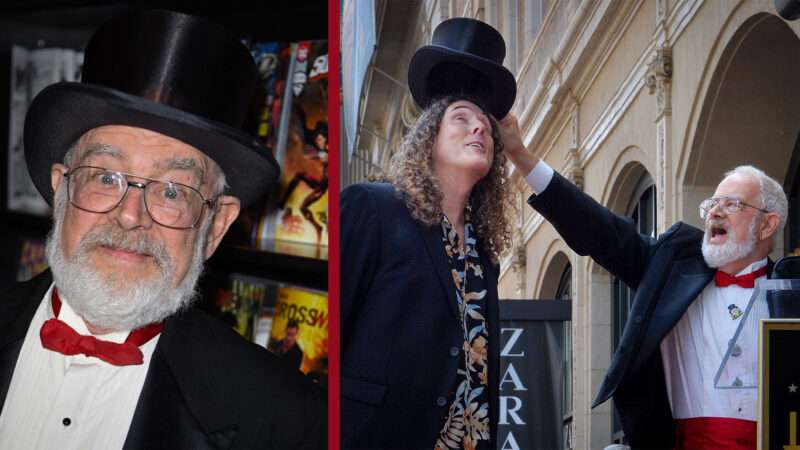
When Barret Hansen, better known as Dr. Demento, recently ended his weekly show, he had spent 55 years spinning weird, silly, or otherwise strange songs on the radio or online. No mere fringe figure, he was an influential figure in American comedy and one of the most important cultural libertarians of his era.
That might seem far-fetched to people who grew up in a post-SNL, post-Seinfeld world. But in the early 1970s, all that lay in the future. Television shows still had to pass strict censorial review to be aired, and the same code policed much of what could be heard on mainstream radio. Hansen’s program pushed against those strictures.
Listeners never knew what Hansen might play. One moment might bring a sweet, old novelty song like the Playmates’ “Beep Beep” about a “little Nash Rambler” that turned out to be more powerful than the Cadillac it was racing. The next moment you might hear a risqué song about sex, like Ruth Wallis’ “Davy’s Dinghy” (it’s not about his boat) or the Lemon Sisters’ lascivious “In My Country” (“The swamp is thick, but don’t be a wussie/Come steer your canoe right through my pussy…willows”). There was drug humor, from the relatively tame “Friendly Neighborhood Narco Agent” to a mid-’90s parody of “The Devil Went Down to Georgia” called “The Devil Went Down to Jamaica” (“Johnny roll a ball of hash, and make sure it’s the bomb/’Cause the devil’s got the kind of stuff they smoked in Vietnam”). “Cows With Guns,” about bovines revolting against slaughter under the leadership of Cow Tse-tung, would compete with classic comic songs from Spike Jones and Tom Lehrer.
And sometimes the show could just get plain weird. Consider the program’s two biggest hits, Barnes & Barnes’ “Fish Heads” and Ogden Edsl’s “Dead Puppies.” The former informs us that fish heads “are never seen drinking cappuccino in Italian restaurants with Oriental women”; the latter laments, “Dead puppies aren’t much fun/They don’t come when you call/They don’t chase squirrels at all.” Other tunes in rotation found dark humor in everything from a school shooting (Julie Brown’s “The Homecoming Queen’s Got a Gun“) to a pedophile (Ogden Edsl’s “Kinko the Clown“). There were the college philosophy meanderings of Tom “T-Bone” Stankus’ “Existential Blues,” crude advice like Frank Zappa’s “Don’t Eat the Yellow Snow,” and a song whose lyrics are mostly just the names of different Los Angeles streets, Felix Figueroa’s “Pico and Sepulveda.”
The program was periodically punctuated with cowbells and sound effects. The host was joined by funny friends with alliterative names, such as Captain Chaos and Laughing Linda. And each show ended with the “Funny Five,” the most requested songs of the week—a tradition that put the listeners at the center of the experience: On this show, you could help shape the dementia.
How Barret Hansen Became Dr. Demento
Hansen grew up in Minneapolis, where he was a loner who listened to records and played them at his high school dances. He went on to get two degrees in music: a Bachelor of Arts from Reed College and a Master of Arts from UCLA. After graduating, he wrote liner notes for record companies, collected records by the bushel, and DJed at KPPC, a free-form FM radio station.
That’s where he became Dr. Demento. One day he played Nervous Norvus’ 1956 novelty hit “Transfusion,” a song about a reckless driver who constantly crashes his car only to be revived by blood transfusions. Someone at the station said he had to be demented to play that record, and his persona was born.
The Dr. Demento Show started in 1971 as a rock show with some novelty hits thrown in, but Hansen quickly discovered that almost all the audience requests were for the funny stuff. By late 1971 he had hopped to KMET, where his four-hour showcase for what he called “loony laughing records” was the No. 1 Sunday night show in the Los Angeles market. He went into national syndication in early 1974 with a taped two-hour version of the show; it rapidly became a success. He was profiled in Newsweek and went on national TV. Some of the songs he played, such as “Junk Food Junkie” and “Shaving Cream,” crossed over and became Top 40 hits. “I was very happy when something that I kind of started hit the charts,” he said.
He had a short break from national syndication in 1977–1978, when his syndicator went bankrupt, but he kept broadcasting until his retirement—the third-longest run in American radio history for a single-hosted musical show. Listeners started sending him their own creations, giving Hansen a new role: Just as Johnny Carson or Lorne Michaels could make a comedian’s career by giving new talent a showcase, Dr. Demento became America’s arbiter of musical comedy.
He wasn’t wedded to any particular type of humor or any single musical genre. If someone sent him a decent record or tape, he’d play it. Let the audience decide was his mantra.
Dr. Demento and Weird Al Yankovic
In that way, he gave a boost to such musical comics as Brad Stanfield, Damaskas, a UCLA co-ed known as Sulu, and the most famous and enduring of his discoveries: Alfred Yankovic, a shy young teenager who gave Hansen his first tape in 1973.
“Weird Al” Yankovic went on to become the most successful musical comedian in U.S. history. He has won five Grammys and an Emmy. His singles have charted for more than 30 years. And Hansen gave him more than his first showcase: The Dr. Demento Show exposed Yankovic to such legendary comic musicians as Stan Freberg, Jones, Lehrer, and Allan Sherman. It was Hansen’s program that inspired Yankovic to become a musical comedian. There would be no Weird Al if there were no Dr. Demento.
When I compare their relationship to that of Col. Parker and Elvis, Hansen quickly notes an essential difference: “I never managed Weird Al.” But in some ways he was even more important than a manager would have been.
Hansen says he”considered myself perhaps a bit of a father figure” to Yankovic, something their roughly 20-year age difference made natural. The lyrics to Yankovic’s break-out song (“Another One Rides the Bus,” a parody of Queen’s “Another One Bites the Dust”) were written in a cabin where Yankovic was spending the weekend with Hansen and some of Hansen’s friends. Hansen helped get Yankovic his first job after college, and he went on a joint tour with Weird Al when Dr. Demento was much the bigger name.
Yankovic has never resented or rejected this influence, and the two are still friends. Hansen remains friends with other protégés too, such as Sulu and Mike “Musical Mike” Kiefer. The DJ’s fans, who range from the alternative rockers Courtney Love and Dave Grohl to the Fox News personalities Greg Gutfeld and Kennedy, still revere him too: A 1990s chat group about the show has evolved into the burgeoning Demented Music Database. The extremely active Dr. Demento Facebook group has more than 146,000 members, and if you search YouTube for one of the novelty songs that Hansen once featured, you’ll almost always find someone in the comments recalling how they first heard it from good old Dr. Demento. Such displays of devotion are rare for a disc jockey years after his peak popularity.
But Hansen wasn’t just a disc jockey. Listening to Dr. Demento was like entering a secret club, one that valued intelligence, nonconformity, and humor. One of my friends calls his discovery of the show in 1974 a “lifeline, a realization that there were other people like me.” Former President Richard Nixon once said that as a boy, he would listen to the train whistle and dream of the “faraway places where he’d like to go.” Each Sunday, Hansen’s train would take us into a demented land and return us home safe and sound.
The Libertarianism of Dr. Demento
Hansen owned more than 200,000 records, one of the largest private collections in the world, and he was always happy to share his interests with his audience. That made him a teacher (some killjoys might say corrupter) of the young. What did he teach in his weekly forays into our homes?
Hansen never had a political agenda per se. He tended to shy away from overtly political humor, and he told Steve Martin in a 1977 interview that he didn’t especially like political jokes. In one of his final episodes, he decried the bitterness of contemporary politics. He told his listeners that anger had made many of the political songs he received less funny and that he played fewer of them as a result.
Nor did he seek to remake comedy. Lots of entertainers were doing that in the 1970s, and his show featured many of them: Mel Brooks, National Lampoon, Monty Python, Steve Martin. Yet, “I didn’t think of myself as being in the same boat” as those people, he says. He just “thought of myself as playing things on the radio that you would never otherwise hear on the radio.”
But that doesn’t mean he wasn’t part of that zeitgeist. Hansen believes in tolerance and freedom, and he brought that view to his show. Anyone could be featured, regardless of race, gender, or age. Anything could be lampooned as long as the treatment wasn’t cruel.
“Occasionally [it] would cross my mind,” he says, that he was a gatekeeper, that if he could open a door, other people could walk through it. “I don’t like barriers,” he adds, and the show certainly proved that. Rusty Warren, Benny Bell, and other longtime musicians whose risqué records had never been played on commercial radio suddenly found fame. Lehrer praised the Doc for helping to “keep him alive” by playing the morbidly satiric songs he’d recorded in the 1950s and ’60s, prompting record companies to reissue his discs. And then there’s Harry “The Hipster” Gibson and his 1943 number “Who Put the Benzedrine in Mrs. Murphy’s Ovaltine?” When Hansen interviewed Gibson in 1976, the singer told the DJ that the record had been banned from airplay for years for being “subversive”—until he got a call that “some cat named Demento” had been playing the forbidden song.
“You probably didn’t know it was labeled subversive,” Gibson told Hansen. His host chuckled softly and said, “Well…”
Hansen darn well knew it was subversive. That was why he played it.
In the early 1990s, Hansen aired some songs making fun of political correctness and commented that colleges falling prey to P.C. were defeating their mission of teaching people how to think for themselves. He believes that barriers are bad whether they come from the right or the left, an attitude that may help explain why he joined the Libertarian Party in the 1980s and spoke at this magazine’s 20th anniversary celebration. His show wasn’t overtly political, but it exuded a kind of cultural libertarianism: Have a good time, be who you are, and don’t worry. It was a message of genial toleration that reached into homes nationwide for two hours every Sunday night for almost 40 years.
What Is Dr. Demento Doing Now?
Just as radio killed vaudeville and television killed radio drama, the internet is killing old-fashioned, music-based radio stations. Those that remain tend to feature prepackaged formats that suppress the spontaneity and originality that the best disc jockeys brought to their programs. The easy accessibility of songs on YouTube and Spotify also means that unusual comedy acts no longer need airtime to get attention.
But Hansen’s still around, even if he isn’t hosting a weekly show anymore. He’s still assembling collections of funny music and recently released his own single, Get Demented. He also showed up recently on the hit CBS sitcom Georgie and Mandy’s First Marriage. The show is set in the 1990s, when Demento’s radio show was still nationally syndicated; Hansen has had two cameos in the past season, evaluating and then playing a fictional song sent to him by one of the characters.
And people are still making the material he loved to transmit over the FM airwaves. Comic musicians (the artists in the Funny Music Project, the Wolves of Glendale, Kira Coviello) tour, post songs on their websites, or just make videos for social media, much as their novelty-act forebears labored in nightclubs and for niche record labels. Coviello’s stage act, Honest2Betsy and her Bawdy Broads, features singing, dancing, ventriloquism, and a segment where she touts herself as the world’s only topless accordion player.
You can call that silly, strange, or funny. But only one word truly captures it: demented.
The post The DJ Who Brought America Weird Al, Tom Lehrer, and 'Cows With Guns' appeared first on Reason.com.
]]>
From Wikipedia, photo by Dmitry Rozhkov of display “Rock on bones” in Gallery “Vinzavod”, Moscow (2008)


My father Vladimir was remarking yesterday about an item from his youth in the USSR: People wanted to hear Western music (such as jazz and rock), but the Soviet authorities wouldn’t allow it to be distributed. One could sometimes hear it on foreign shortwave broadcasts, but how to record it? And if one could get a smuggled foreign LP, how to duplicate it? Consumer tape recorders were generally unavailable. People had record players, and some people managed to cobble together recording machines for LPs. But the standard recording medium—vinyl—wasn’t available to ordinary consumers.
So people would record instead on used X-rays, such as the ones you can see above. The story made its way into the West some time ago; there’s a recent book on the subject, Bone Music: Soviet X-Ray Audio, and an accompanying web site. Here’s an excerpt from the site:
The bootleggers’ first technical problem, that of obtaining a machine to record with was relatively straightforward. Literature existed explaining audio recording techniques (say in case a righteous citizen wanted to copy the speeches of Comrade Stalin) and various recording machines had been brought back from Germany as trophies after the second world war. These could be adapted or copied, but a further problem existed. The State completely controlled the means of manufacturing records. You couldn’t just go and buy the vinyl or shellac or lacquer needed in a store somewhere.
But at some point, some enterprising music lover hit on a genius idea. An alternative source of raw materials was available – used X-ray plates obtained from local hospitals. And that is where this story really begins. For many older people in Russia remember seeing and hearing strange vinyl type discs when they were young.
The discs had partial images of skeletons on them and were called ‘Bones’ or ‘Ribs’ and they contained wonderful music, music that was forbidden. The practice of copying and recording music onto X-rays really got going in St Petersburg, a port where it was … easier to obtain illicit records from abroad. But it spread, first to Moscow and then to most major conurbations throughout the states of the Soviet Union.
The term “Roentgenizdat” is of course cognate to “samizdat.” “Samizdat” was a combination of “self-” (“sam”) and the first two syllables of “publishing house” (“izdatel’stvo”). The “sam” was replaced by “Рентген,” often anglicized as “Roentgen,” which is the root for all things X-ray in Russian (after the discoverer of X-rays, Wilhelm Conrad Röntgen).
The post Memories of a Different Planet: Roentgenizdat appeared first on Reason.com.
]]>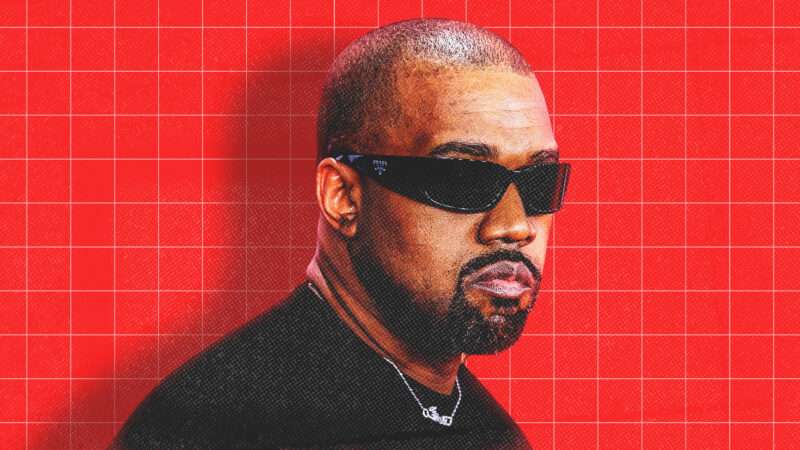
Ye, the artist formerly known as Kanye West, has been barred from entering the United Kingdom over his history of antisemitic statements. He was expected to headline Wireless Festival in North London in July, which has since been cancelled.
West, who is undoubtedly one of the most influential artists of his generation, has had his career derailed by his racist comments. In 2022, he tweeted, “I’m going death con 3 On JEWISH PEOPLE.” In 2025, he began selling swastika T-shirts and subsequently released the track “Heil Hitler.” However, in January 2026, West took out an advertisement in The Wall Street Journal apologizing for his antisemitism, saying he was “not a Nazi or an antisemite,” and that his outbursts were the result of his bipolar disorder.
This apology was not enough for the British government. “Kanye West should never have been invited to headline Wireless,” Prime Minister Keir Starmer wrote in a Tuesday X post. “This government stands firmly with the Jewish community, and we will not stop in our fight to confront and defeat the poison of antisemitism.”
But in vowing to “confront and defeat the poison of antisemitism,” the U.K. government is overstepping and infringing on free speech. Unfortunately, this is a common occurrence in modern Britain. As a result of Section 1 of the Malicious Communications Act 1988 and Section 127 of the Communications Act 2003, which make it illegal to share content of a “grossly offensive or of an indecent, obscene, or menacing character” online, authorities have routinely rounded people up for their online activity. In 2023, police forces across England and Wales made 12,183 arrests (about 33 per day) for offensive online speech.
“Free speech is always difficult. It presents you with moral dilemmas…Kanye West has absolutely, notoriously, internationally renowned, mad, and disgusting views. But that’s not the same as saying that his music, what he is going to perform at a festival, is something that the government of a country should be involved in,” Claire Fox, member of the House of Lords, tells Reason.
Last year, the Northern Irish band Kneecap was allowed to perform at Glastonbury Festival, despite shouting “up Hamas, up Hezbollah” and telling their audience in 2023 that “the only good Tory is a dead Tory. Kill your [member of parliament].” Despite allowing the performance to take place, the U.K. government subsequently attempted to charge a member of the rap group for terror following his alleged display of a Hezbollah flag at a separate O2 concert.
Fox describes the move to ban Ye from entering the U.K. as “performative,” especially seeing as the government has refused to designate Iran’s Islamic Revolutionary Guard Corps as a terrorist organization (even though the U.S. and E.U. have) and has “brought in an official definition of anti-Muslim hostility, which will chill any criticism of home-grown Islamist prejudice against Jews.” This government’s official definition of Islamophobia, which was released in March, has been criticized for being overly broad and creating a de facto ban against all critical speech of Islam. The Free Speech Union, a free speech public interest body, is bringing a judicial review challenging the definition.
“The UK’s government is easily convinced to exercise the broad discretionary powers it is granted by law to punish people for what they say, both in an immigration context and in a domestic law enforcement context,” Preston Byrne, a tech and free speech lawyer and senior fellow at the London-based Adam Smith Institute, tells Reason.
“What happened to Ye in a border control setting is the same thing that happens to people like Graham Linehan, Andrew Bridgen, Allison Pearson, J.K. Rowling, and tens of thousands of other Britons each and every year who are targeted by either petty complainers or political campaigners who seek to call down the power of the state to regulate the marketplace of ideas,” he adds.
Byrne, alongside Michael Reiners and Elijah Granet, has published a “Free Speech Bill,” a document aiming to create protections for free speech in the U.K. The model legislation proposes repealing or amending the laws that have caused arrests over free speech, and adopting a Brandenburg test for incitement, which only restricts speech that is “likely to incite…imminent lawless action.”
Ye’s comments may have been distasteful, but Brits could have voiced their opposition by simply not attending the festival. Instead, the government stepped in, assuming even more power over speech in the United Kingdom. Ye haters may applaud this intervention now, but the precedent it sets can just as easily be used against them.
The post You Don't Have To Like Kanye West To Hate His Ban From Britain appeared first on Reason.com.
]]>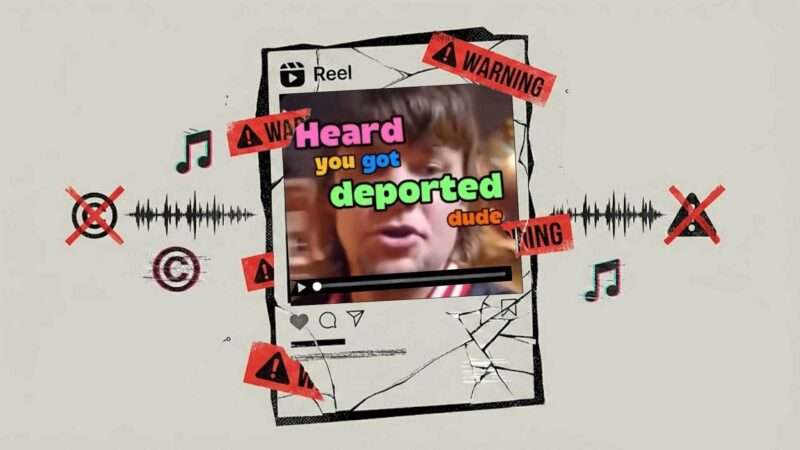
As masked Immigration and Customs Enforcement (ICE) agents deploy to U.S. cities, the Trump administration is also running a social media campaign. Its effort to stay viral online is colliding with copyright law.
Between January 26 and November 10, 2025, the Department of Homeland Security (DHS) posted 487 times on Instagram—more than 28 percent of the agency’s total posting since joining the platform in 2014. The posts promote the crackdown by mixing 20th century propaganda with modern memes, and they feature a wide range of popular imagery and audio.
But not all the content they use has been licensed—or welcomed. Several creators have pushed back on the unauthorized use of their copyright-protected work.
In July, the band Black Rebel Motorcycle Club blasted DHS for using its rendition of “God’s Gonna Cut You Down” without permission in a since-removed video featuring DHS Secretary Kristi Noem. “It’s obvious that you don’t respect Copyright Law and Artist Rights any more than you respect Habeas Corpus and Due Process rights,” the band said in a post on X.
Singer Kenny Loggins requested that his song “Danger Zone” be removed from an AI video Donald Trump posted on Truth Social depicting the president dumping feces on protesters from a fighter jet. Songs by MGMT, Jay-Z, and Tom Petty were likewise removed after the artists or their estates condemned the unauthorized use. Olivia Rodrigo also called out DHS for using her song “all-american bitch” in a video encouraging self-deportation. Rodrigo, whose father is Filipino, commented, “Don’t ever use my songs to promote your racist, hateful propaganda.”
DHS’ unauthorized use of copyright protected work extends beyond music. Over the summer, the White House used audio from British airline Jet2.com without the company’s endorsement.
In September 2025, comedian Theo Von objected to DHS using his voice in a video. “I didn’t approve to be used in this,” Von wrote in a comment to the video. “I know you know my address so send a check.” He requested the video be removed, saying that his views on immigration are “more nuanced than this video allows.”
The department also used the Pokémon theme song and visuals in an unauthorized promotional video, comparing undocumented immigrants to fictional creatures that are caught for sport, and posted an image from the video game Halo, likening undocumented immigrants to a parasitic infection. When asked about the pushback from the game’s creators, a DHS spokesperson told journalist Alyssa Mercante, “We will reach people where they are with content they can relate to and understand, whether that be Halo, Pokémon, Lord of the Rings, or any other medium.”
DHS is bound by copyright law, as Congress waived the federal government’s sovereign immunity from copyright infringement. While the agency might claim the posts qualify as “fair use“—which permits limited use of copyrighted material without permission for reasons such as criticism, commentary, and news reporting—promotional material and recruitment advertisements would likely be considered commercial use, requiring copyright holder permission.
Although this “ask for forgiveness, not permission” approach risks lawsuits, the Trump administration—under a notoriously litigious president—seems to be willing to roll the dice. So far it’s working. Despite many notable copyright strikes on social media platforms this year, no lawsuits have been filed against DHS or the Trump administration for any recent copyright infringements.
Even if the Trump administration were taken to court, it isn’t clear that a loss would stop the offending posts. Successful plaintiffs cannot compel the federal government to stop or remove infringing material. They can only demand that the artists receive “reasonable and entire compensation,” including monetary damages and lost profits associated with the infringement. Litigation may make sense when copyright holders can prove they’ve suffered large monetary losses from the government’s infringement, but litigation is not an effective way to stop future use of unauthorized content.
Rather than spend time and money acquiring approval for its use of copyrighted work, DHS can simply shrug off instances where creators object. Without any real consequences for copyright infringements, DHS simply doesn’t have much incentive to follow the law. Under Trump, DHS flouts copyright law with impunity. Ironic, given the whole premise of its propaganda push is that it’s restoring the rule of law to the immigration system.
The post The Trump Administration's Deportation Reels Keep Getting Copyright Strikes for Using Music Without Permission appeared first on Reason.com.
]]>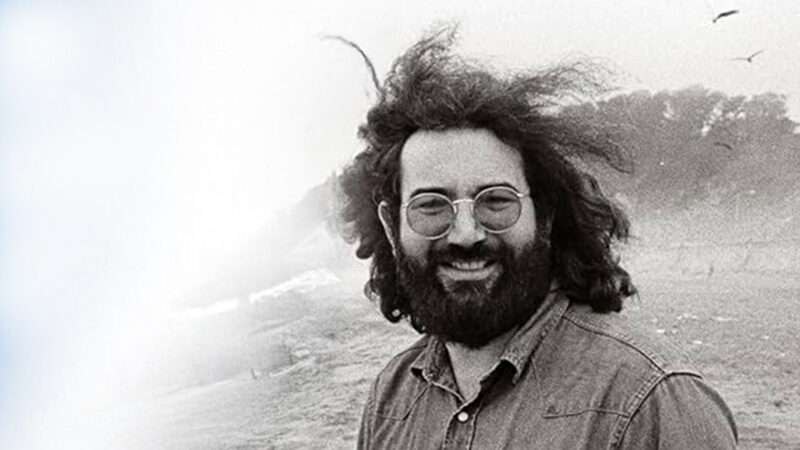
Former Los Angeles Times man Jim Newton, in his book Here Beside the Rising Tide, picked a representative subject through which to judge the achievements and excesses of the 1960s counterculture: Grateful Dead guitarist and singer Jerry Garcia.
Garcia served briefly in the U.S. Army before getting sucked into the nascent bohemia around the Menlo Park and San Francisco areas in the mid-’60s—one shaped partly by CIA experiments in giving LSD to citizens, including novelist Ken Kesey and Garcia’s lyric-writing partner Robert Hunter. Garcia abjured electoral politics and world changing as a deliberate vocation (though Newton hits some insights by running Garcia’s history alongside that of fellow California entertainer Ronald Reagan). But President Richard Nixon used Garcia in a campaign ad to represent the untamed American rebel youth many voters hoped he’d quash. Garcia’s band made important appearances at many way stations in American culture, from Woodstock to Altamont to MTV to the early internet.
Garcia once said it was a “lie” that freedom means “absolutely and utterly free,” explaining that “along with freedom there’s implicit responsibility…there is no free ride.” Garcia worked hard to make his California hippie troupe what was in many years the highest grossing band in America.
He also abused his liberty to feed his appetites for food and drugs. That cost him his life. But while he lived, he provided insight, aesthetic bliss, and clues about different ways to approach creativity, community, and business. Few Americans have been as influential. As Newton notes, Garcia’s form of freedom “doesn’t work for everyone, and doesn’t always work even for those who come to accept it,” but “it’s magnificent when it does.”
The post Review: Charting Jerry Garcia's Enormous Cultural Impact appeared first on Reason.com.
]]>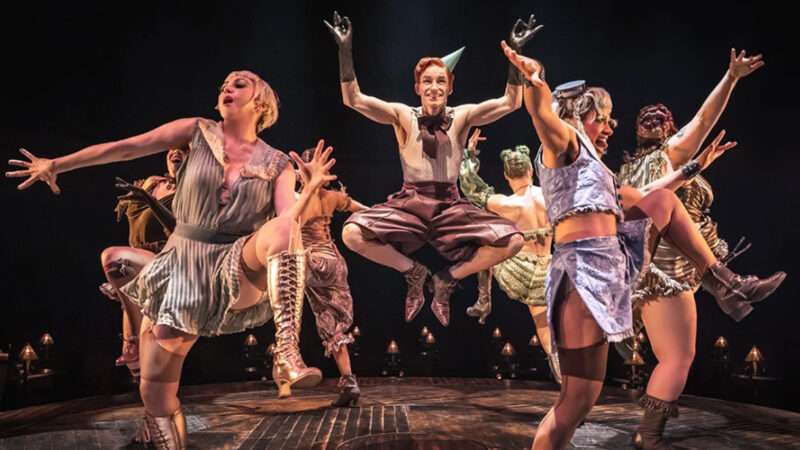
Cabaret begins with the Kit Kat Klub’s flamboyant master of ceremonies enticing the audience to leave their worries outside: “Life is disappointing? Forget it!” It ends with the same character—an unforgettably haunting performance by Eddie Redmayne when I saw the show this past summer, though Adam Lambert took over the role in October—donning a boxy suit and attempting to blend into a world where drawing attention to yourself in certain ways is no longer safe.
That’s the real tragedy at the center of Cabaret, which debuted theatrically in 1966, became a hit film in 1972, and was revived in 2024 at Broadway’s August Wilson Theatre. Yes, the Nazis take power and the war comes and the audience knows that millions will die after the curtain falls—but all that takes place outside the frame of the story. Cabaret is about vulnerable people, powerless against the rise of a sweeping authoritarian regime, each seeking a way to cope with the unprecedented times in which they live.
As politics punctures their lives in various ways, they move, they mourn, they try to blend in, or they try to go on as if nothing has changed. If they survive what’s coming, it seems certain it will be as something less than their full selves. That’s the cost of enduring when freedom fades.
The post Review: <i>Cabaret</i>'s Broadway Revival appeared first on Reason.com.
]]>
Every January 1, numerous creative works enter the public domain, meaning their copyrights have expired and they can be freely shared, sold, or adapted. Last year Mickey and Minnie Mouse—or at least their original incarnations—entered the public domain, and starting today such classic works as Ernest Hemingway’s novel A Farewell to Arms, Alfred Hitchcock’s film Blackmail, and the cartoon characters Popeye and Tintin also become free for use.
But at the moment there is perhaps no better testament to the importance of the public domain than Wicked.
Though it did not open in wide release until November 22, the movie musical was the year’s third highest grossing film at the domestic box office, behind only a Pixar sequel and a Marvel superhero film. It has also received acclaim from both critics and audiences alike.
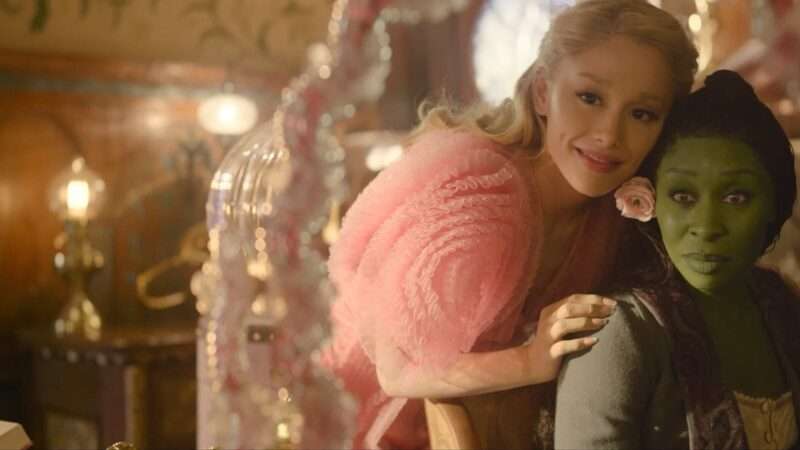
The film depicts an alternative backstory for the Good Witch of the North (Ariana Grande) and the Wicked Witch of the West (Cynthia Erivo), famously of The Wizard of Oz. It is an adaptation of the hugely popular Broadway musical of the same name, which was adapted from Gregory Maguire’s 1995 novel Wicked: The Life and Times of the Wicked Witch of the West, which itself reimagines L. Frank Baum’s Oz books, which began with the 1900 novel The Wonderful Wizard of Oz. Phew!
Baum’s book has been adapted many times, most famously with MGM’s 1939 film The Wizard of Oz, presented partly in black-and-white and partly in color. “From a production standpoint, it is something to marvel at, for the settings are not only exceedingly lavish, but also unusually imaginative; and the technicolor photography adds to their beauty,” said a contemporaneous review in the trade journal Harrison’s Reports. “Pictures of this caliber bring credit to the industry.”
According to the Library of Congress, the 1939 Wizard of Oz “has been seen by more viewers than any other movie.” But even though Oz is one of the most famous creative works of all time, Maguire needed nobody’s permission to adapt its characters and settings for his book.
The Copyright Act of 1790, the first U.S. law of its kind, allowed authors to protect their creative works for 14 years; if they were still alive, they could then renew it for another 14 years. After that, the work would fall into the public domain and could be used freely without compensation.
Decades later, the Copyright Act of 1831 doubled the initial term to 28 years and allowed an author’s spouse or children to request the extension in the event the author had died. This was the law in effect in 1900, when Baum published The Wonderful Wizard of Oz. (A later law also retroactively extended the second term to 28 years, for a maximum of 56.) Baum’s widow renewed the copyright in 1928, and the book—including all its characters and settings—entered the public domain in 1956. Maguire, and anyone else, was free to draw from that novel for their own original works.
The most prominent reimagining after then and before Wicked was probably The Wiz, which told the same story as The Wizard of Oz with an all-black cast and a soundtrack featuring gospel, funk, and soul music. The Wiz premiered on Broadway in 1975 and won seven Tony Awards, including Best Musical, Best Featured Actor, Best Featured Actress, and Best Original Score. It was later adapted into a 1978 film with Diana Ross and Michael Jackson.
But The Wiz intentionally drew from Baum’s novel, not the 1939 film—which remained under copyright and would require paying MGM for the privilege. In Baum’s book, for example, Dorothy uses magical silver shoes to get home to Kansas; in the 1939 film, MGM changed the shoes to the iconic ruby slippers, to show off the Technicolor photography. The Wiz returned Dorothy’s shoes to their original silver, as did Wicked, since red shoes are included in MGM’s copyright. (There are elements of Wicked that seem to pay homage to the 1939 movie, but they at least arguably fall within the bounds of fair use.)
Congress has changed copyright law numerous times over the years—in each case, extending the amount of time something is protected. The most recent change came from the Sonny Bono Copyright Term Extension Act of 1998, which established that all works published since 1978 are under copyright protection until 70 years after the author’s death; works created between 1924 and 1978 are protected for 95 years—including The Wizard of Oz, which is covered until 2035.
If the current law had been in effect when Baum released his first Oz novel, it would not have entered the public domain until 1990. This predates Maguire’s book, but numerous other works, such as The Wiz, would not have existed unless the creators could afford the rights. In a recent interview, Maguire mentioned The Wiz as a progenitor to Wicked, so it’s entirely possible that Maguire’s work would not exist without such earlier adaptations.
American copyright law stems from Article I, Section 8 of the U.S. Constitution, which allows the government “to promote the Progress of Science and useful Arts, by securing for limited Times to Authors and Inventors the exclusive Right to their respective Writings and Discoveries.” Over time, Congress has stretched the term limited nearly beyond recognition. L. Frank Baum clearly found a 42-year copyright term acceptable when he published The Wonderful Wizard of Oz—not to mention the sequels and Oz-themed films and comics he wrote in his lifetime. The original novel alone sold more than three million copies before entering the public domain; to make the 1939 film, producer Samuel Goldwyn paid $40,000 (more than $910,000 in current dollars) for the rights to the novel.
Two of composer George Gershwin’s works also enter the public domain today: the composition An American in Paris and a 1924 recording of Rhapsody in Blue. Gershwin died in 1937, while his brother—lyricist Ira Gershwin, who helped write the song “Over the Rainbow” for The Wizard of Oz—died in 1983. Neither man had children, but their nieces and nephews took over the family catalogue. These heirs and their children now routinely adapt and rerelease their forebears’ songs in new musicals (covered by new copyrights) and make millions of dollars in the process, despite having no direct connection to the original works. In 2009, more than 70 years after the Gershwins’ final joint composition, the catalogue generated $8 million in annual royalties.
It’s hard to imagine that George and Ira Gershwin’s interests are best served by keeping their works under lock and key for decades, prevented from being adapted or repurposed without paying their distant relatives for permission. Similarly, adaptations such as The Wiz and Wicked prove the public domain’s importance for fostering creativity, allowing new works based on established properties to emerge, to find success, and to inspire yet more works in the future.
The post <i>Wicked</i> and the Importance of the Public Domain appeared first on Reason.com.
]]>
A global phenomenon that is astonishingly productive and creative, generating untold sums of wealth by enriching other people’s lives and making them obsessed with new material they never knew they wanted—all while shaking off the haters, constantly inventing new eras, and achieving phenomenal popularity.
I’m referring, obviously, to capitalism.
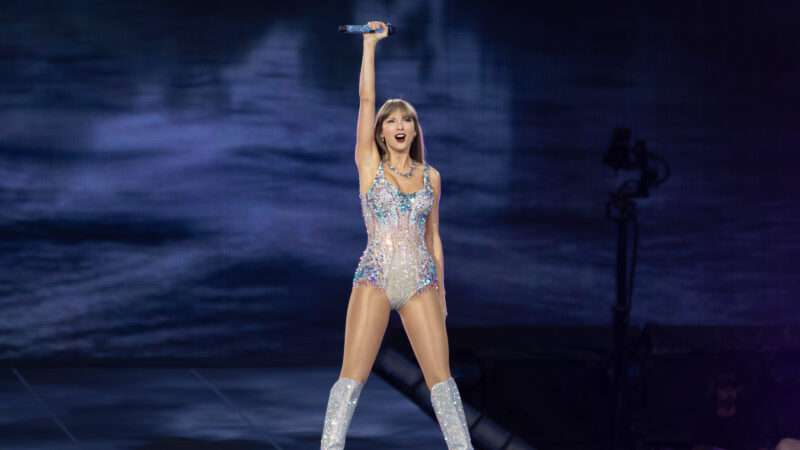
The system of market economics driven by the profit motive and backed by the private decision-making of individuals is even more popular than global music superstar Taylor Swift, according to a recent NBC survey of registered voters.
In that poll, 51 percent of respondents said they view capitalism positively, while just 25 percent view it negatively. That’s a +26 approval rating for capitalism, which dwarves the ratings given to such prominent politicians as Vice President Kamala Harris (+3), President Joe Biden (-8), and former President Donald Trump (-13). Even Swift, who recently endorsed Harris, scores just +6, with 33 percent of respondents having positive feelings about her.
Socialism, meanwhile, is liked by just 18 percent and disliked by 55 percent of respondents. (It does, however, poll better than the Heritage Foundation’s “Project 2025,” which tells you something about how disastrous the roll-out of that agenda has been for the conservative think tank.)
Polling all this is a bit silly, of course, but it’s a nice reminder that the political class on both left and right are out of touch with the views of most Americans. Most people understand that markets have been a positive thing—a solution to the obscene levels of poverty that plagued humanity for most of its existence—rather than a problem requiring government action to control.
In fact, if Republicans were eager to counter-balance Swift’s endorsement of Harris with an even more potent ally of their own, they might try courting the capitalist vote. That would, however, require the GOP’s current leaders to abandon their interest in protectionism, their eagerness to tell private businesses what they can buy and sell, and other forms of economic illiteracy.
After all, capitalism being more popular than Swift makes sense. You could have capitalism without Swift, but you could never have Swift—or any other modern pop star—without an underlying economic system that rewards talented individuals, offers extra incentives to be creative, and provides the rest of us with the wealth necessary to support her art.
And it will still be here long after she’s gone out of style.
The post What's More Popular Than Taylor Swift? Capitalism. appeared first on Reason.com.
]]>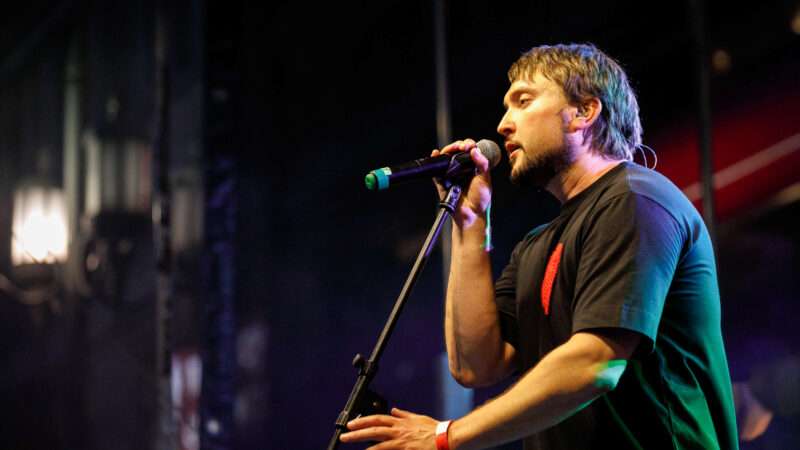
A Belarusian court has sentenced the members of dissident rock band Nizkiz to two years of prison labor after finding them guilty of “organizing and plotting actions grossly violating public order.” After President Alexander Lukashenko won a sixth term in the country’s disputed 2020 election, mass protests broke out. Nizkiz released the song “Rules,” which became a protest anthem, and filmed the song’s music video at the site of one of those demonstrations. The government also placed the band on its official registry of extremists, effectively banning its music and making its fans targets for prosecution.
The post Brickbat: Stop the Music appeared first on Reason.com.
]]>
By now, the formula for musical biopics has become so familiar that it’s become background noise: A young person with talent and a dream sets out from lowly beginnings, gets lucky, has a spree of success, wanders into a dark place as fame and fortune take their toll, and finally finds a way out, becoming a legend in the process. Sometimes this makes for passable entertainment and even allows for some stylistic pizazz; more often it makes for by-the-numbers stories built around middling impressions of famous singers.
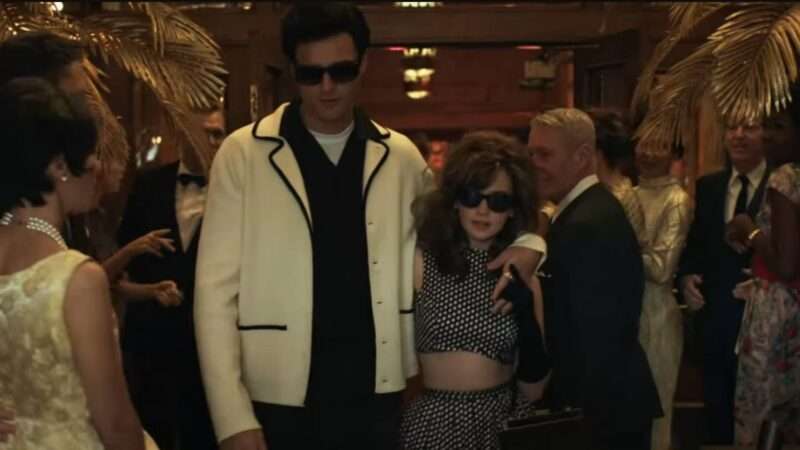
Sophia Coppola’s Priscilla takes a different approach: Although it spans much of the career of Elvis Presley (Jacob Elordi), it shifts the focus to someone in his orbit, his young girlfriend and eventually wife, Priscilla (Cailee Spaeny).
Here, the rise and fall of one of America’s most popular singers is witnessed at a remove, by an outsider brought—one might say lured—into his world. And the focus is not so much on recounting the highlights of his already famous career than on dramatizing the behind-the-scenes domestic life of someone in his orbit. It’s a quietly remarkable film that, as with so many of Coppola’s works, places a young woman’s experience at the center of the story, giving her agency even in the midst of what amounts to a real-world fantasy life.
When we first meet Priscilla, she’s sitting at an officer’s club in Germany at the end of the 1950s. A man in uniform approaches and asks if she’d like to join him and his wife at a party—and not just any party. Presley, who was in the military, was stationed nearby, and they’d be going to his house. You can see the apprehension in her eyes, the inhere suspicion about an older man who wants to hang out with a girl who was just a freshman in high school. But you also see the appeal to a teenager who feels trapped, lonely, and bored while stationed in an unfamiliar country. She convinces her wary parents to let her go and eventually falls for Elvis’ charms.
One can imagine a less subtle movie that portrays the age and power gap between a famous heartthrob and a high-school girl as simple exploitation, especially in the age of warnings about groomers and age-gap relationships.
But Coppola’s film, which is based on Priscilla Presley’s 1985 memoir, delivers something far more nuanced, something that doesn’t simply treat Priscilla as a helpless individual who is acted upon. Rather, the movie shows Elvis using his power, his fame, his mumbling charm to get what he wants—but also that Priscilla herself wanted to be with him, wanted the life of wealth and glamour that he offered, the escape from the mundanities of life with her mother and stepfather.
Even as she becomes something more like a trapped woman, with the mercurial Elvis dictating what she must wear, refusing to let her work, and demanding that she stay home alone for long stretches while he films movies (and has widely reported flings), she retains a real sense of agency. More than anything, the movie is about Priscilla’s discovery that her life is her own, that she exists independent of the strange whims and peculiarities of a famous man.
All of this is captured with Coppola’s signature deftness—the desaturated low-light photography, the moody pop soundtrack, and the focus on scenery and objects that have defined her work going back to The Virgin Suicides, Marie Antoinette, and Lost in Translation. There’s a carefully calibrated, almost textural quality to all of these movies and the worlds they depict, a world of tactile luxury that is fascinating but empty. Like all of those movies, Priscilla follows a young woman of privilege who finds herself surrounded by beautiful things in an uncanny, yet ultimately disappointing, world. Unlike so many rote musical biopics, it’s not about becoming a legend; it’s about a woman becoming herself.
The post <i>Priscilla</i> Is an Elvis Movie That Isn't About Elvis appeared first on Reason.com.
]]>